
Research Projects
Research Categories
🚀 Mission Design and Trajectory Optimization
Reinforcement Learning for Tour Design
🏛️ NASA JPL Collaboration
- Developing tour design algorithms and contingency planning with trajectory reuse, in collaboration with NASA JPL
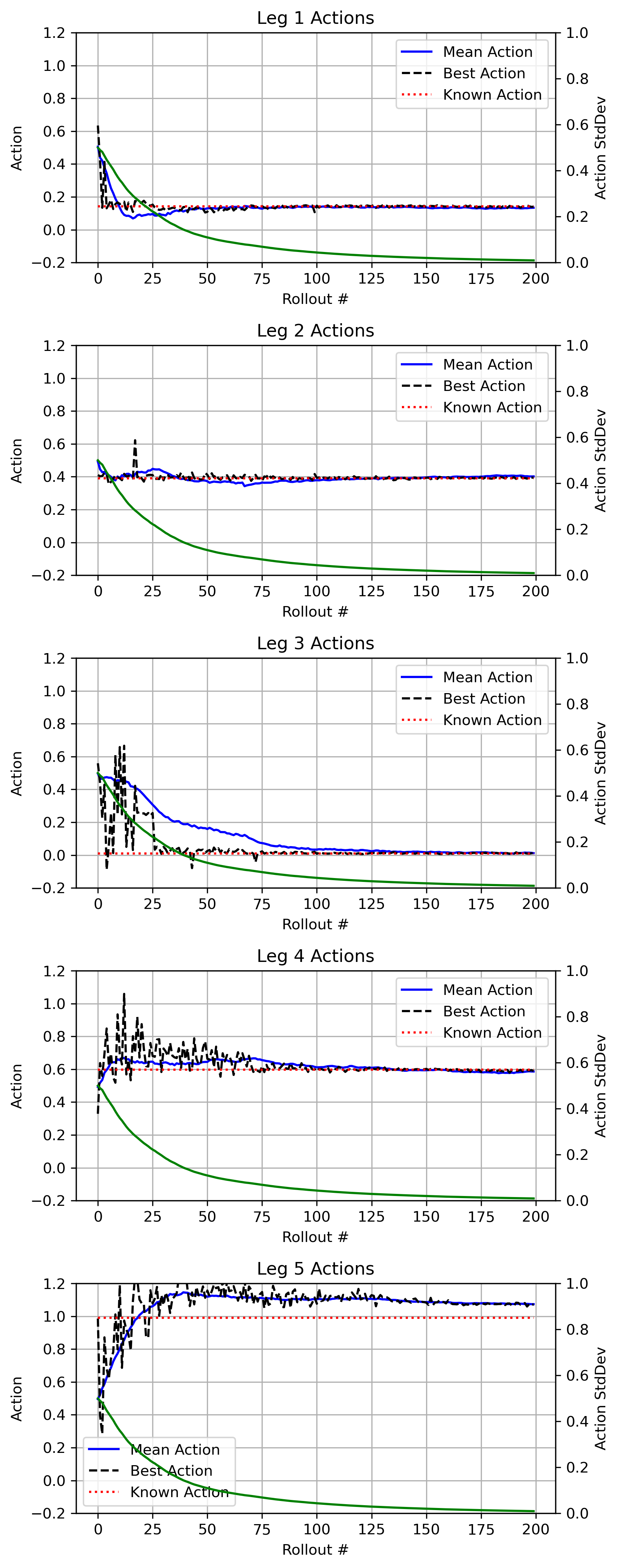
Figure 1: RL action training history for Cassini-like example.
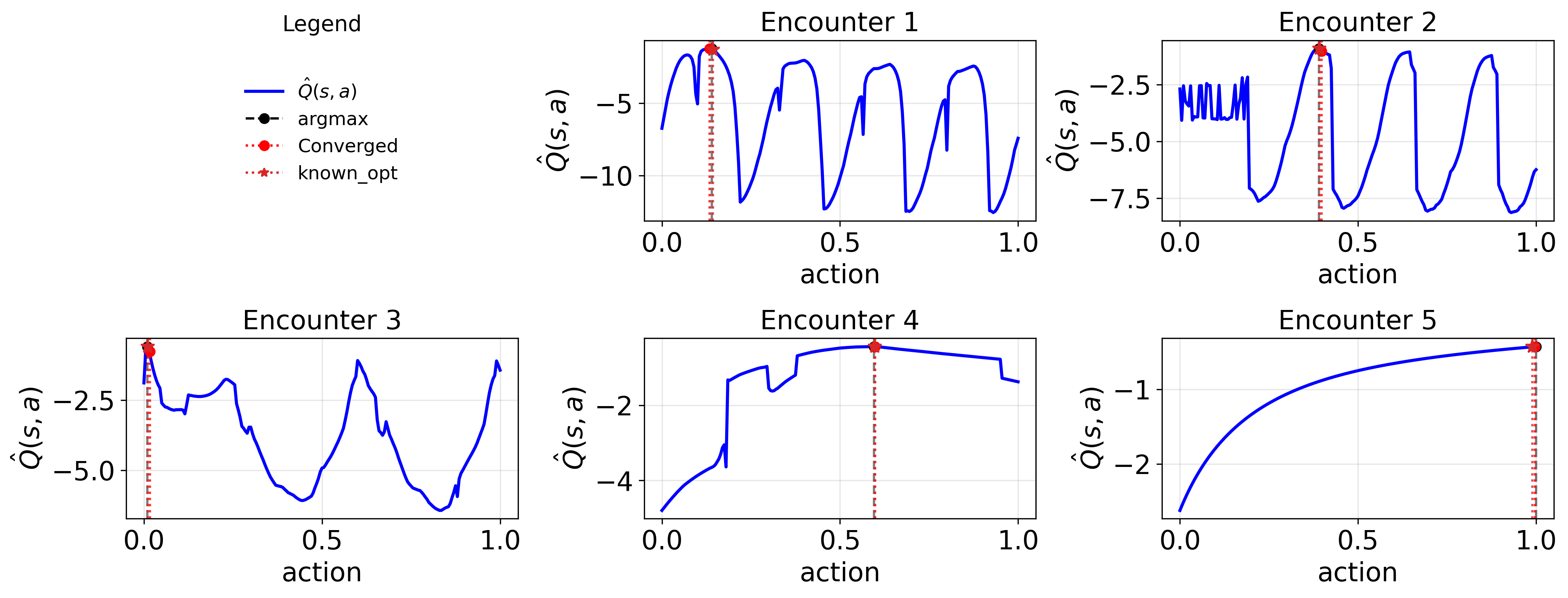
Figure 2: Approximated action value at each encounter.
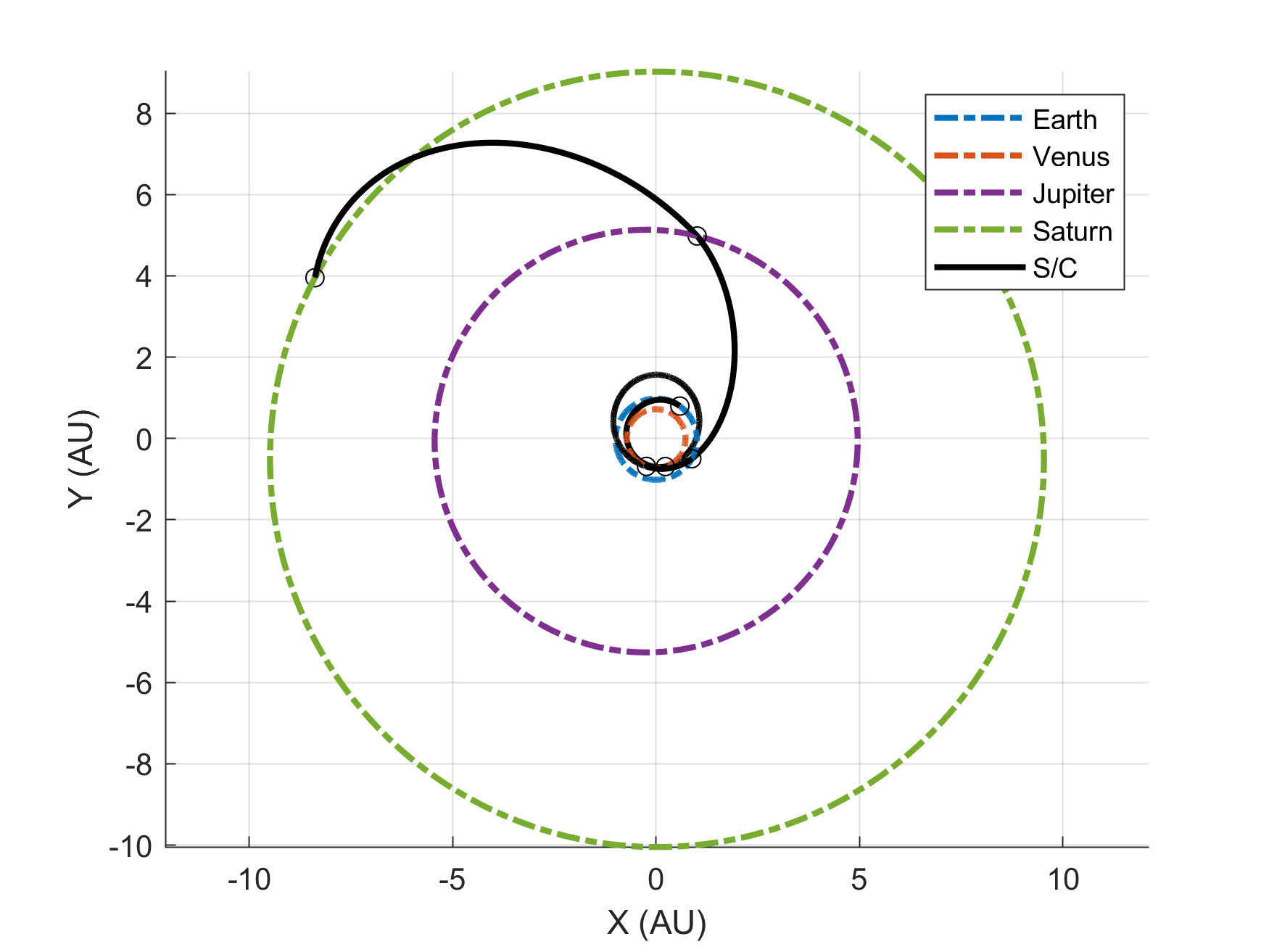
(a)
(b)
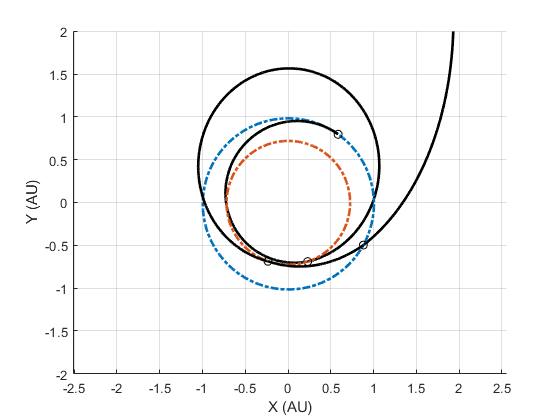
Figure 3: Cassini-like trajectories (zoomed-out left / zoomed-in right)
Machine Learning Applications to Lambert's Problem
🏛️ NASA JPL Collaboration
- Constructing data-driven frameworks for fast prediction of Lambert's problems, in collaboration with NASA JPL
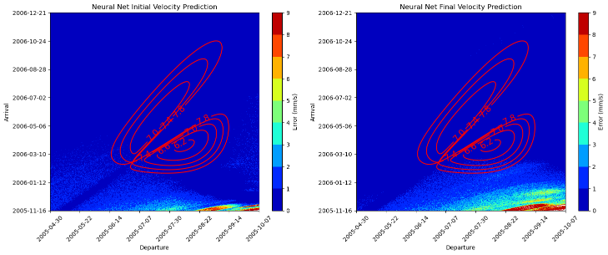
Figure 1: Earth-Mars Porkchop plot NN prediction error at departure (left) and arrival (right)
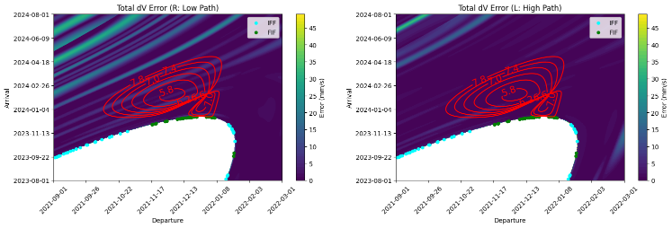
Figure 2: Earth-Mars Porkchop plot for 1-revolution solution of NN prediction error at departure (left) and arrival (right)
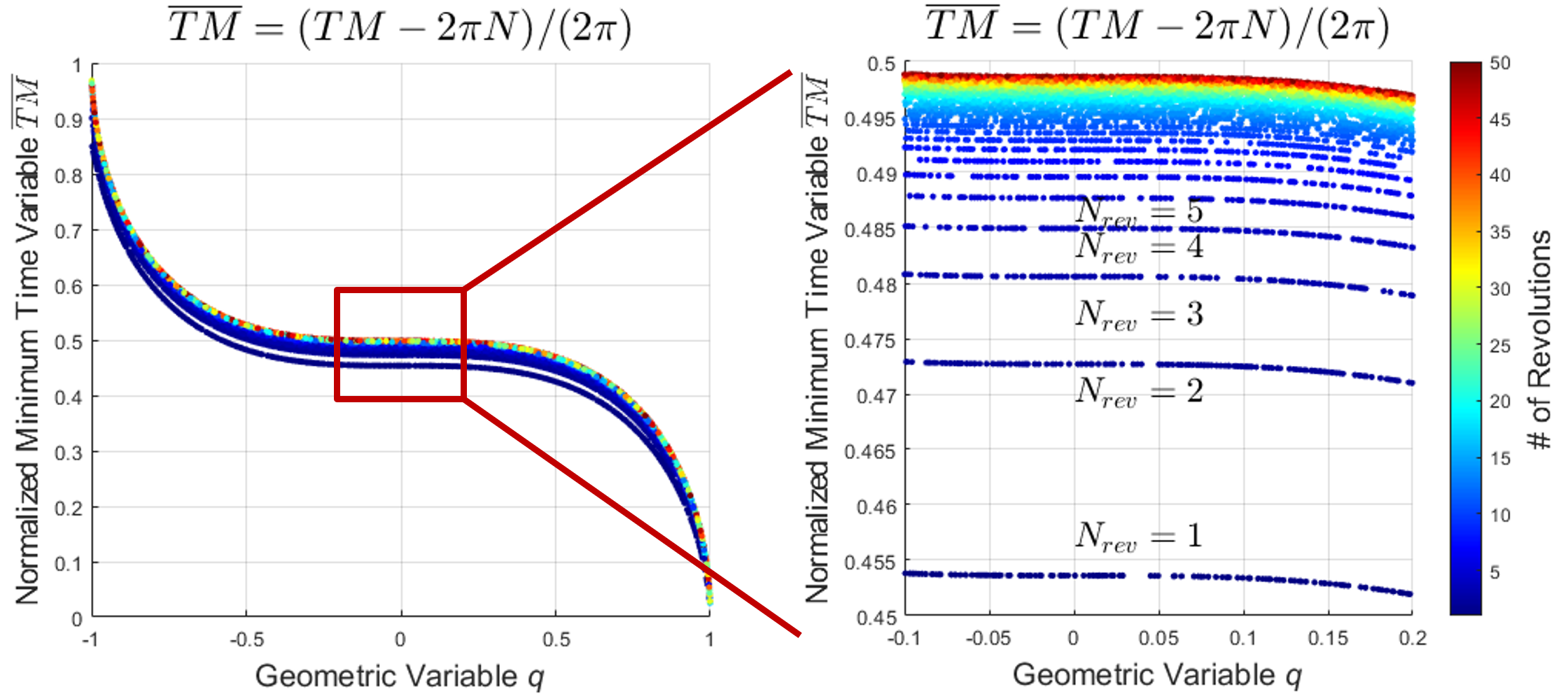
Figure 3: The relationship between geometric variable and minimum time variable at each revolution (N)
Machine Learning–Based Prediction of Optimal Deep Space Maneuvers
- Applying machine learning models to predict the location and timing of optimal deep space maneuvers

Figure 1: NN-based predicted DSM delta-V compared to ballistic and true value
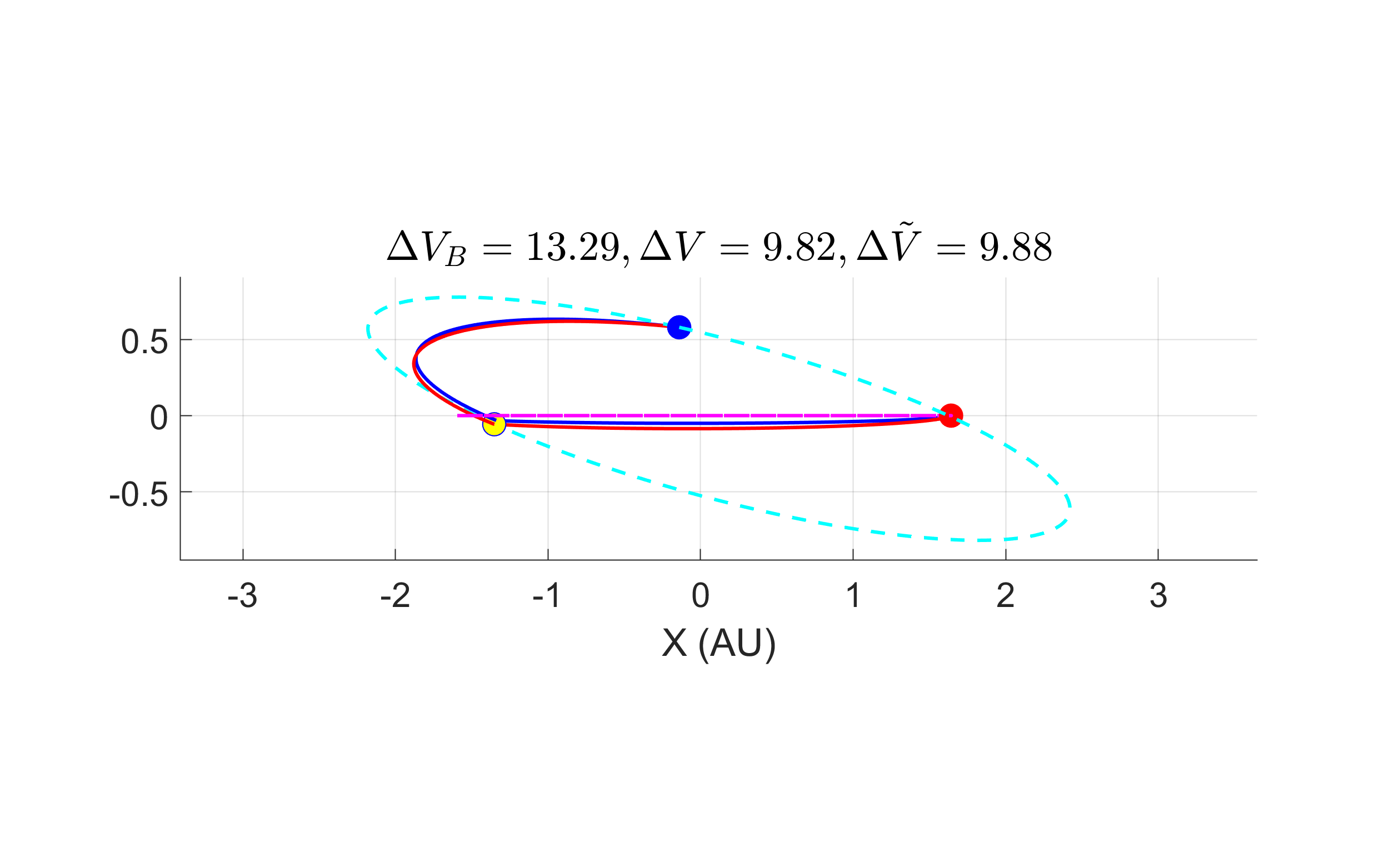
(a)
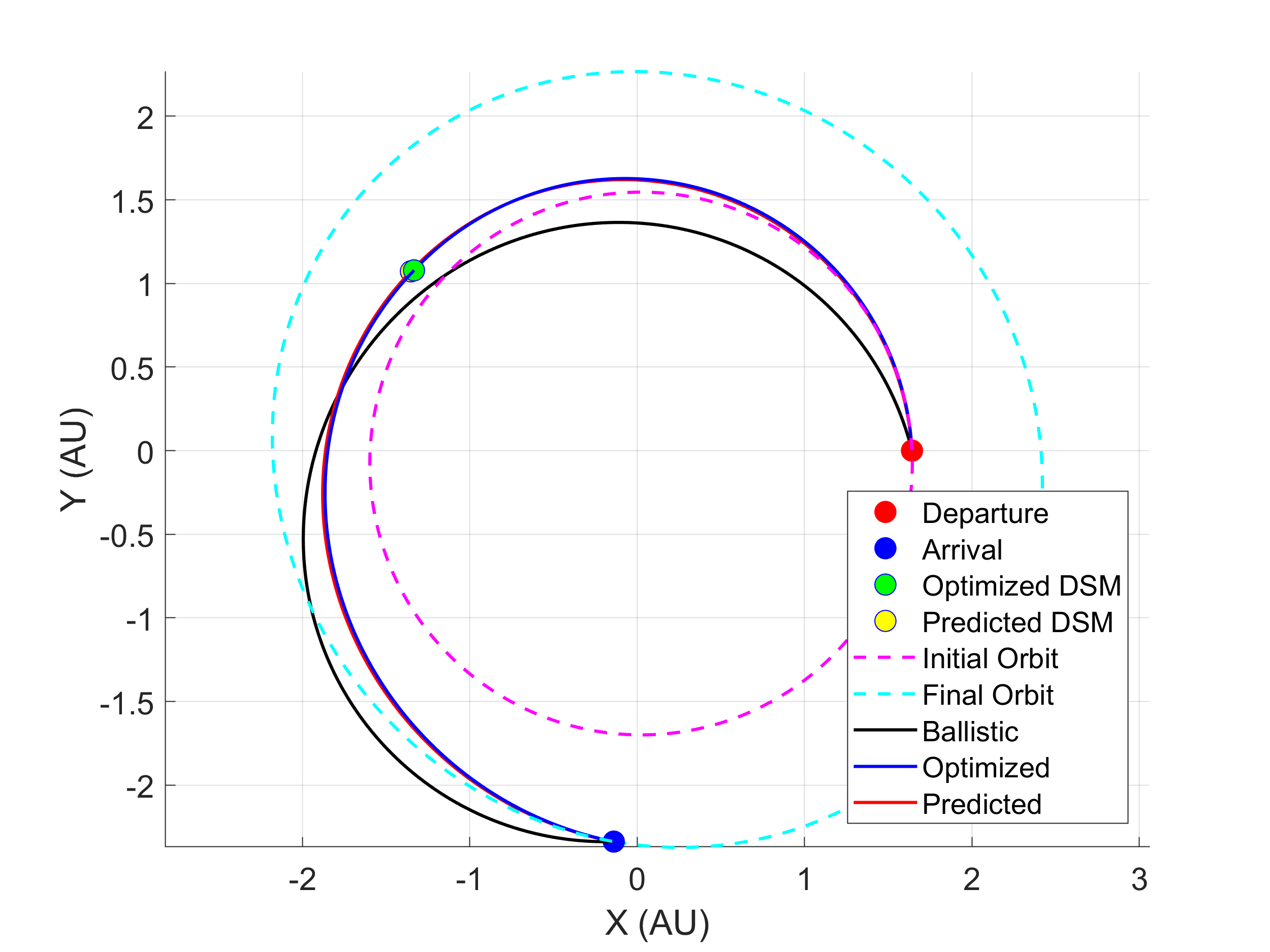
(b)
Figure 2: Optimal DSM predicted by NN
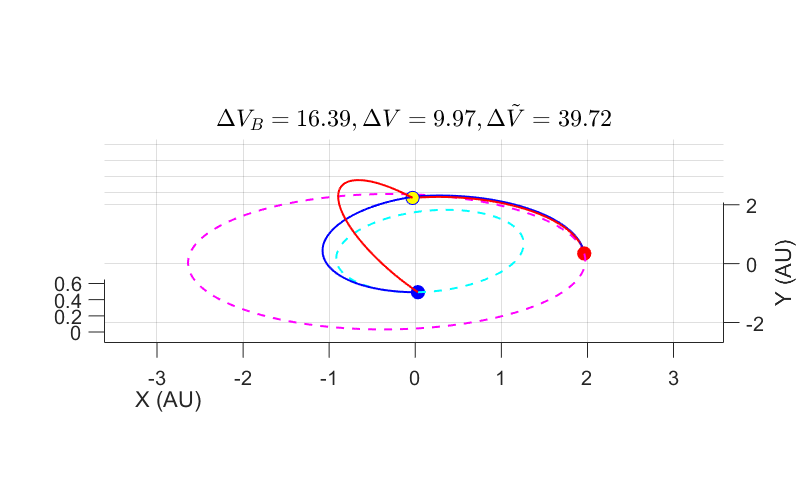
(a)
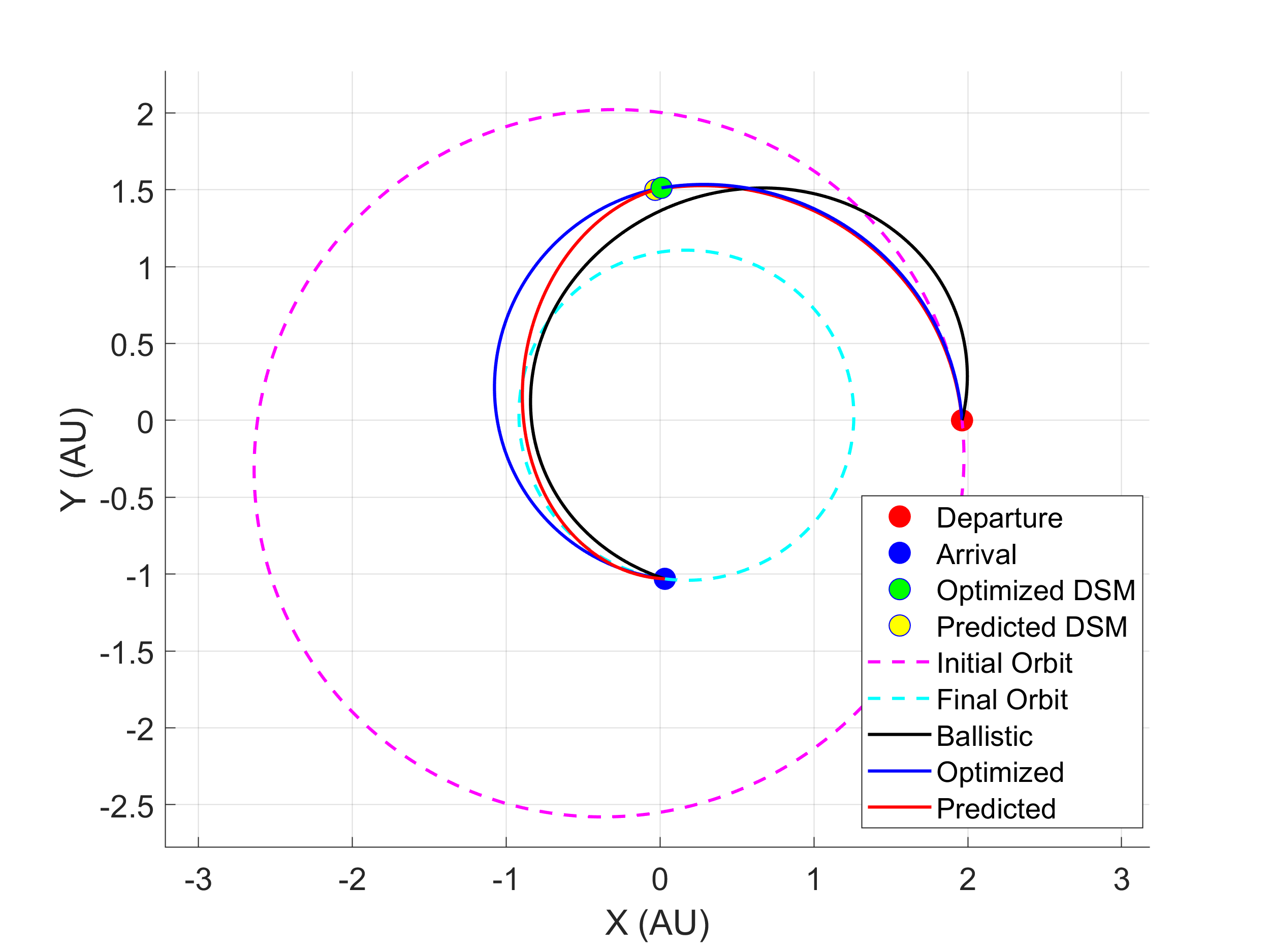
(b)
Figure 3: Failed prediction by NN caused by 180-degree transfer singularity
🌀 Low-Thrust Trajectory and Optimal Control
Low-Thrust Trajectory Design Using a Shape-Based Approach
- Establishing shape-based trajectory formulation incorporating necessary conditions of optimality
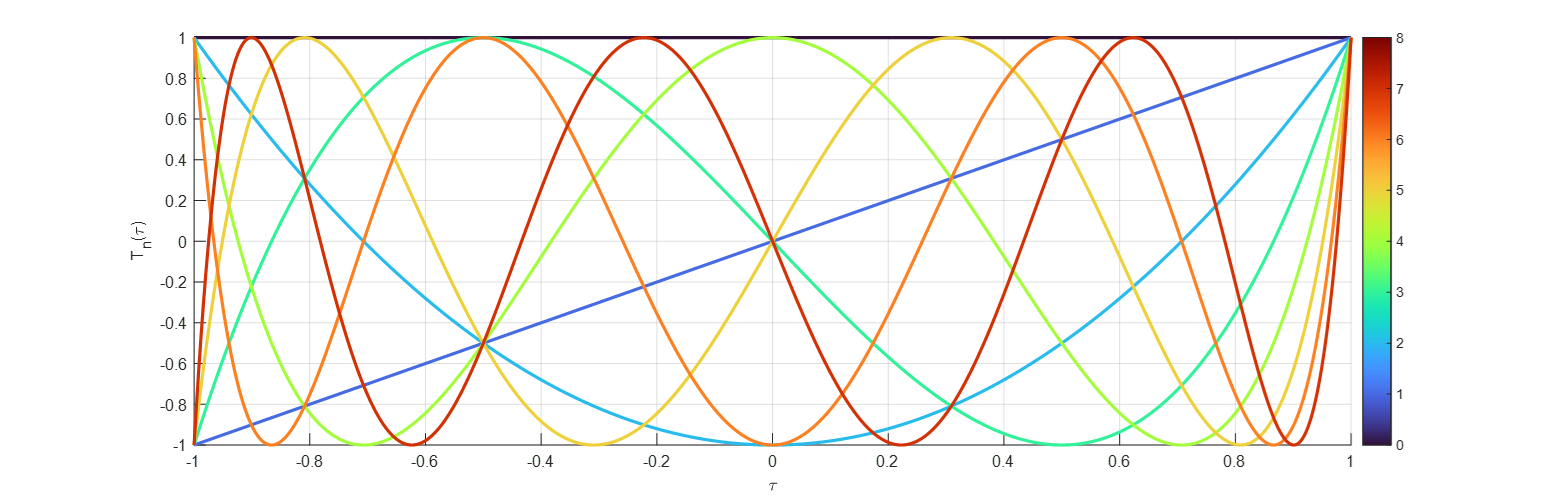
Figure 1: Chebyshev polynomial
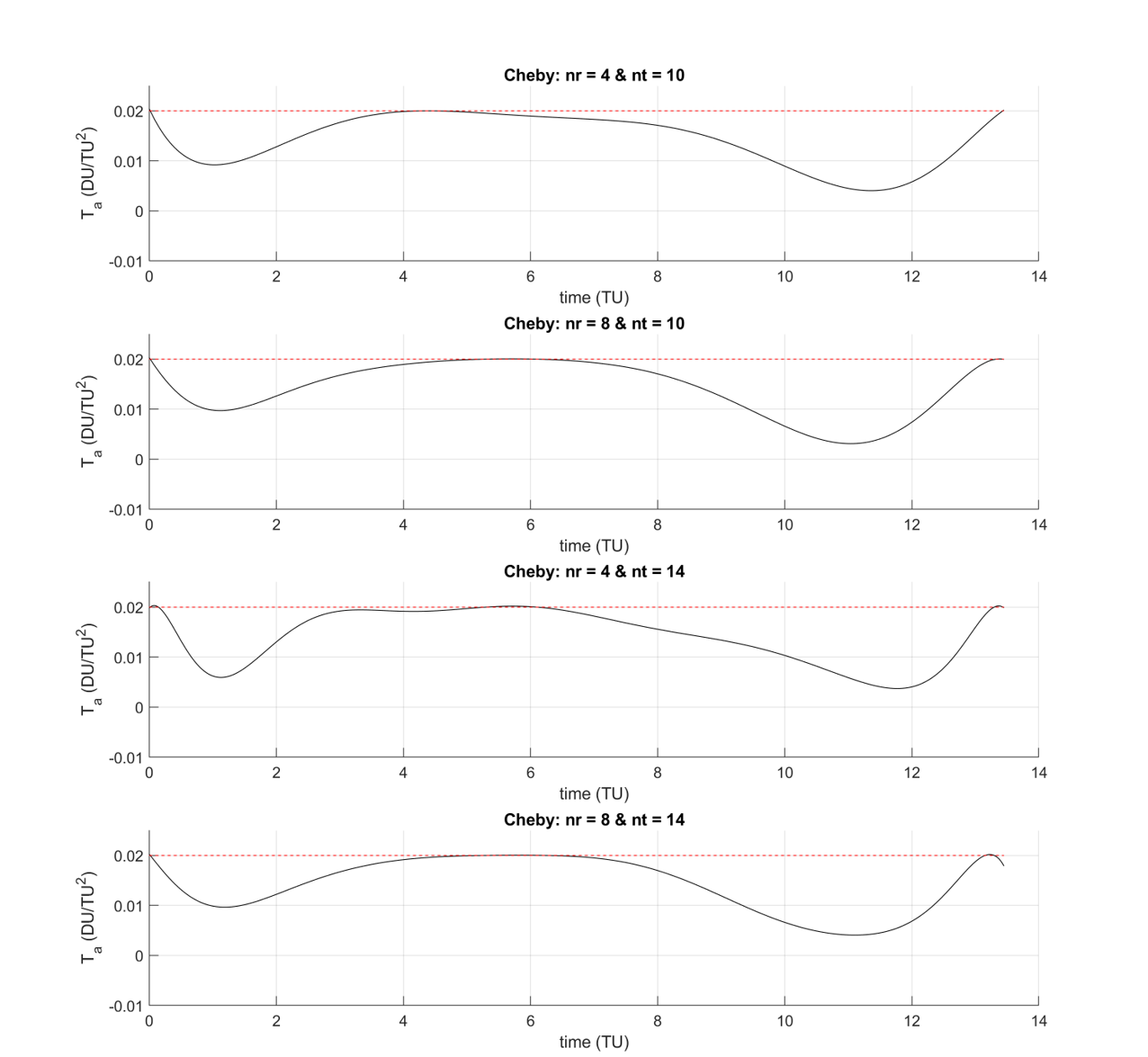
Figure 2: Thrust profile by Chebyshev polynomial shape-based method varying the number of coefficients
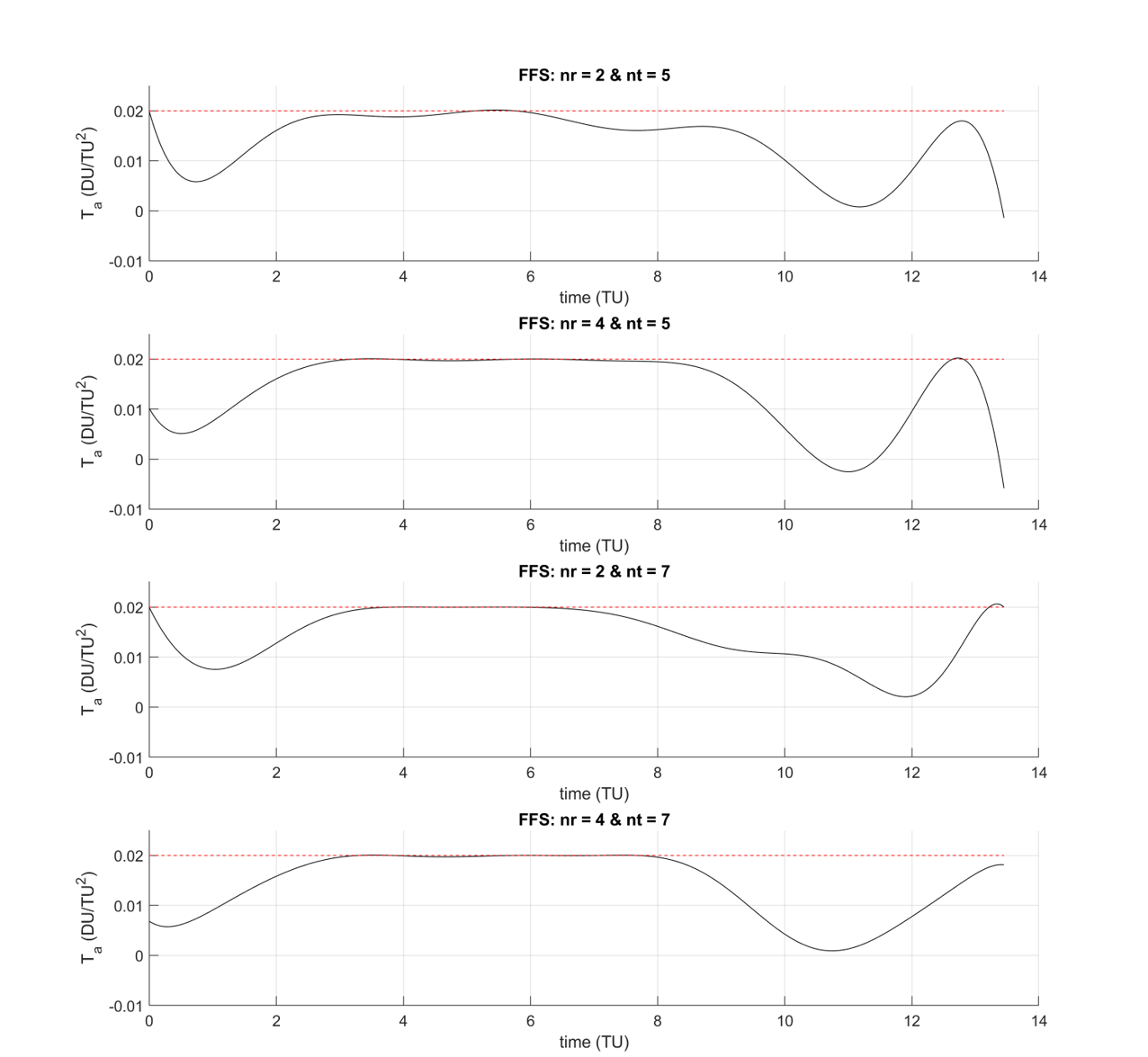
Figure 3: Thrust profile by Finite Fourier series shape-based method varying the number of coefficients (To compare Cheby poly)
Low-Thrust Trajectory Optimization Using Extreme Theory of Functional Connections
- Leveraging extreme theory of functional connection for efficient solution of low-thrust optimal control problems
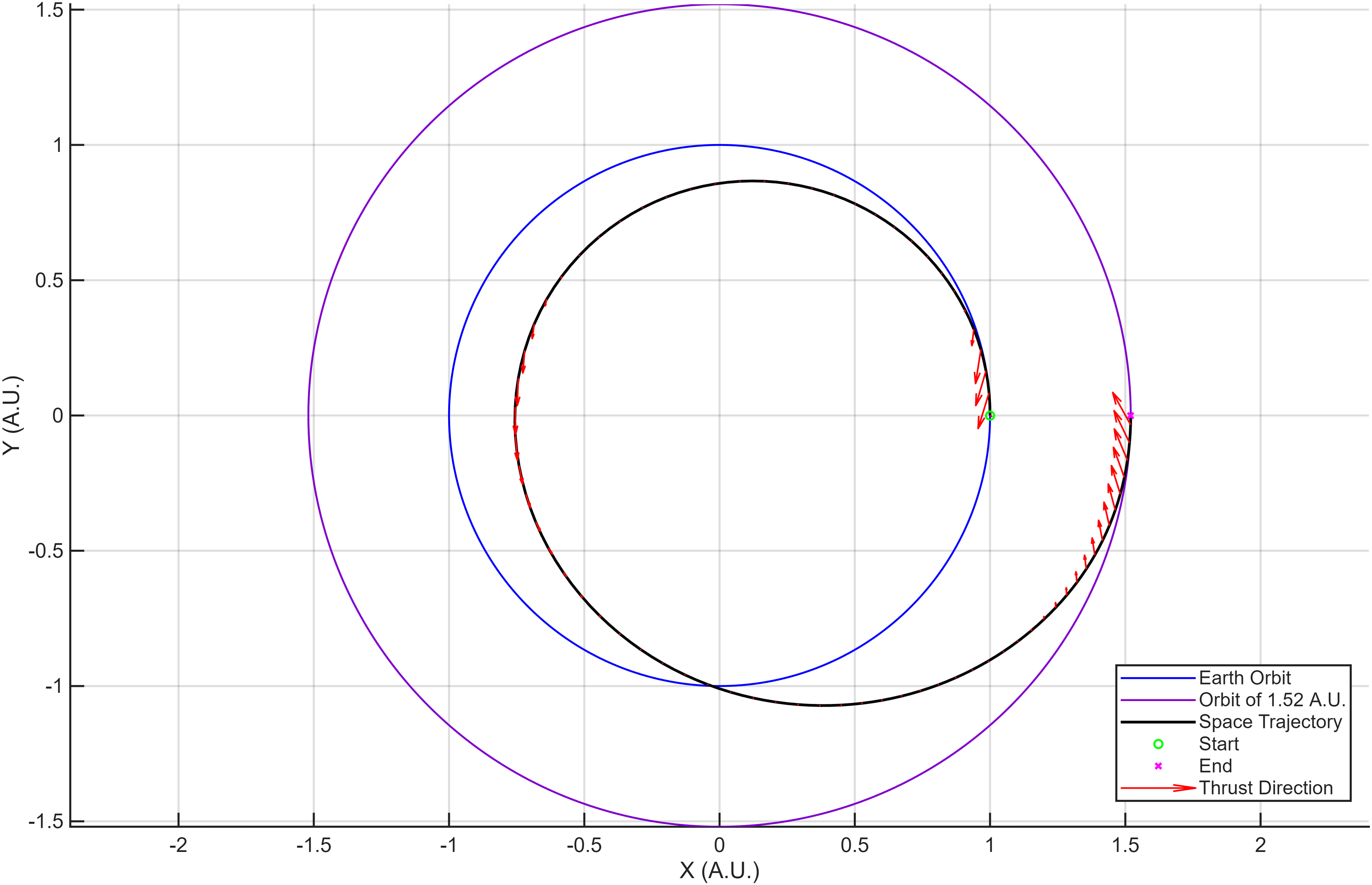
Figure 1: Earth to Mars low-thrust optimal trajectory using X-TFC direct method
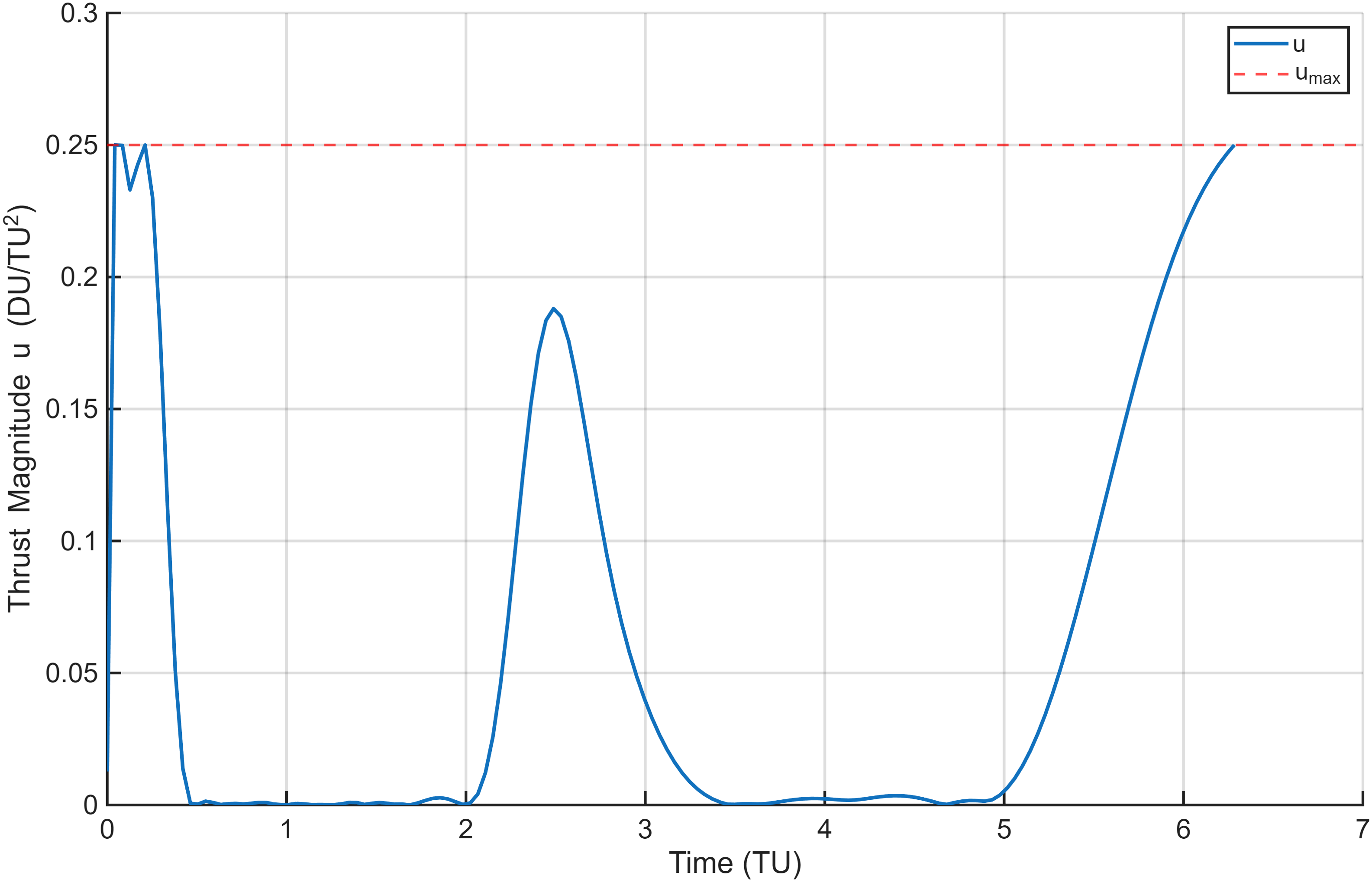
Figure 2: Optimal thrust profile using X-TFC direct method
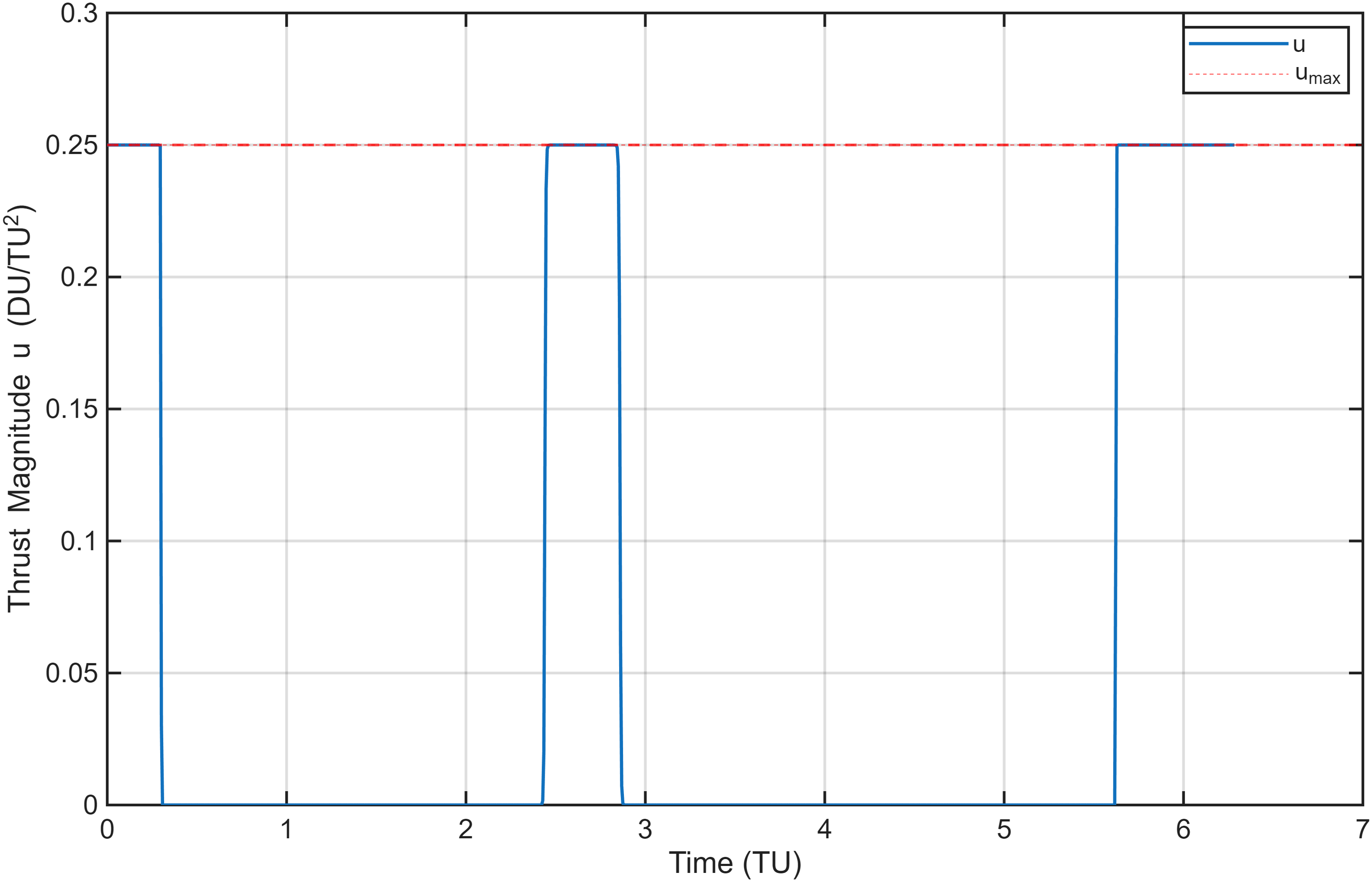
Figure 3: Optimal thrust profile using indirect method.
🪐 Multi-Body Dynamics & Periodic Orbit Families
Physics-Informed Neural Network Application to the Circular Restricted Three-Body Problem
- Investigating physics-based machine learning to resolve two-point boundary-value problems in CRTBP
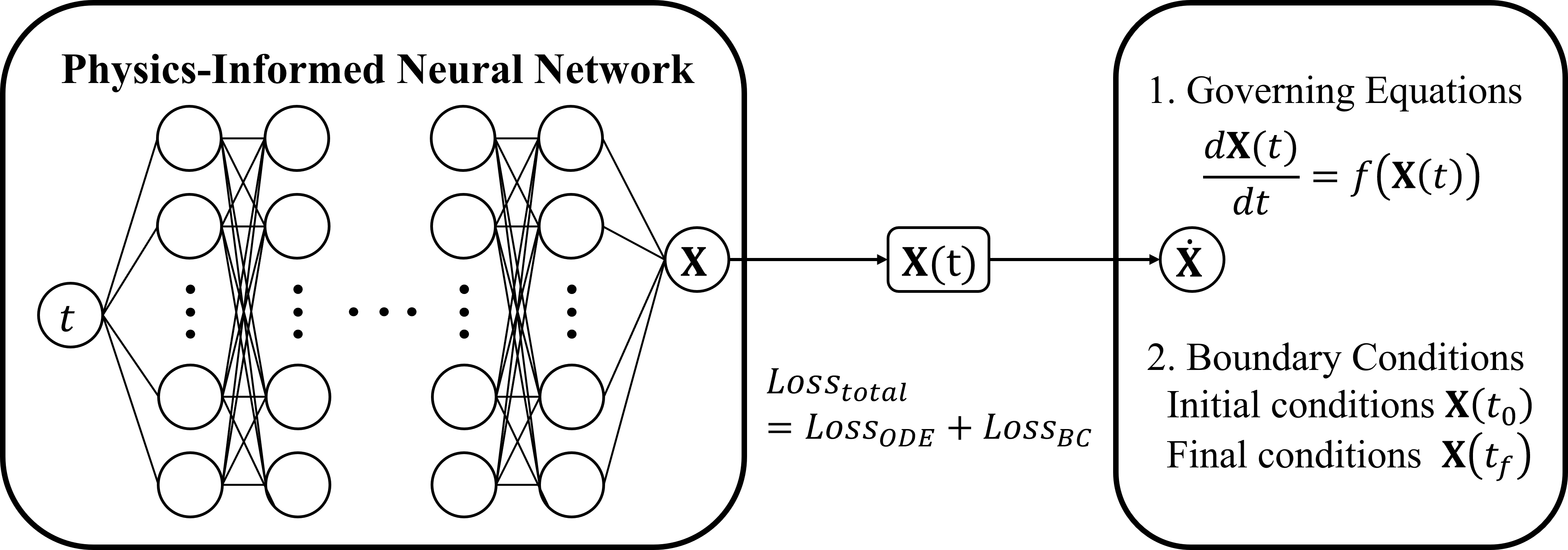
Figure 1: Physics-informed neural network framework
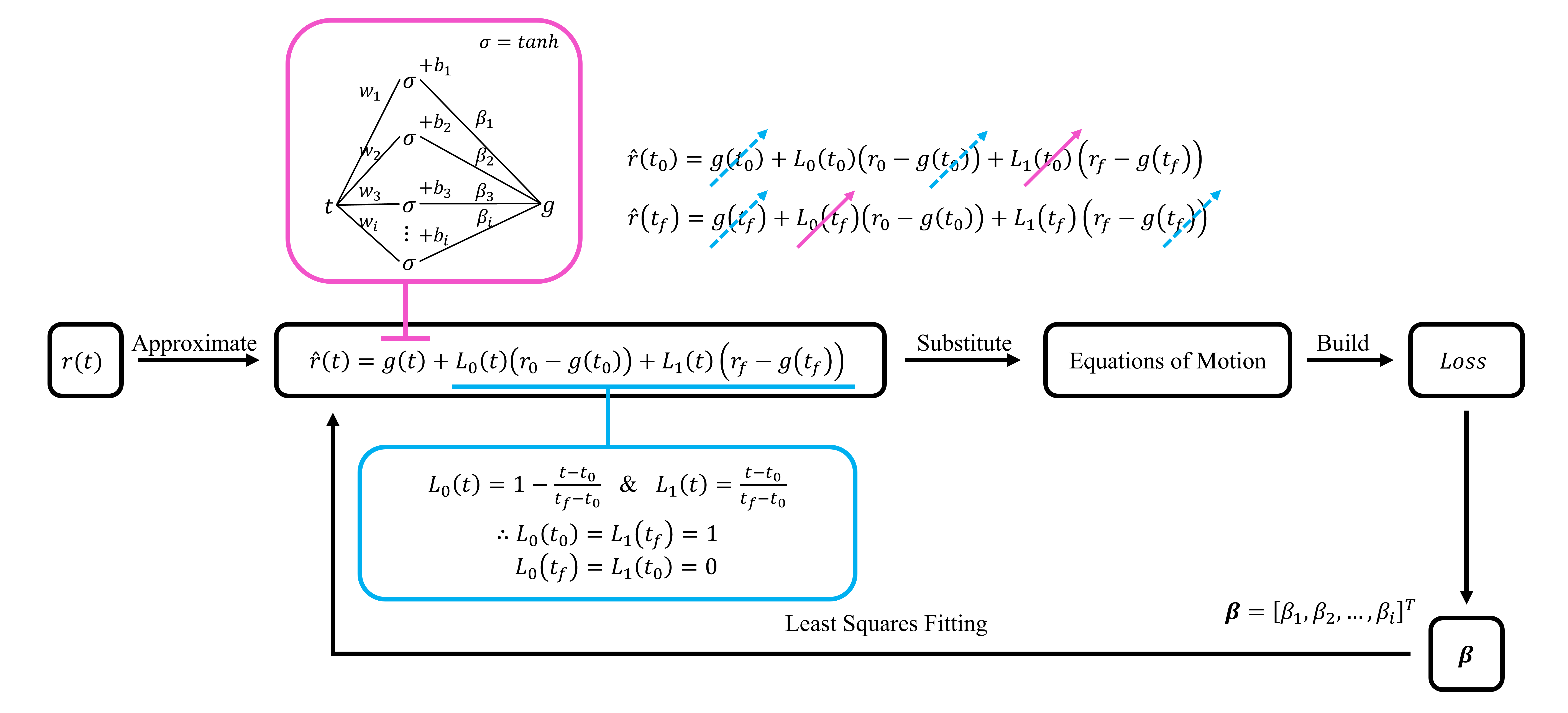
Figure 2: Extreme theory of functional connection framework
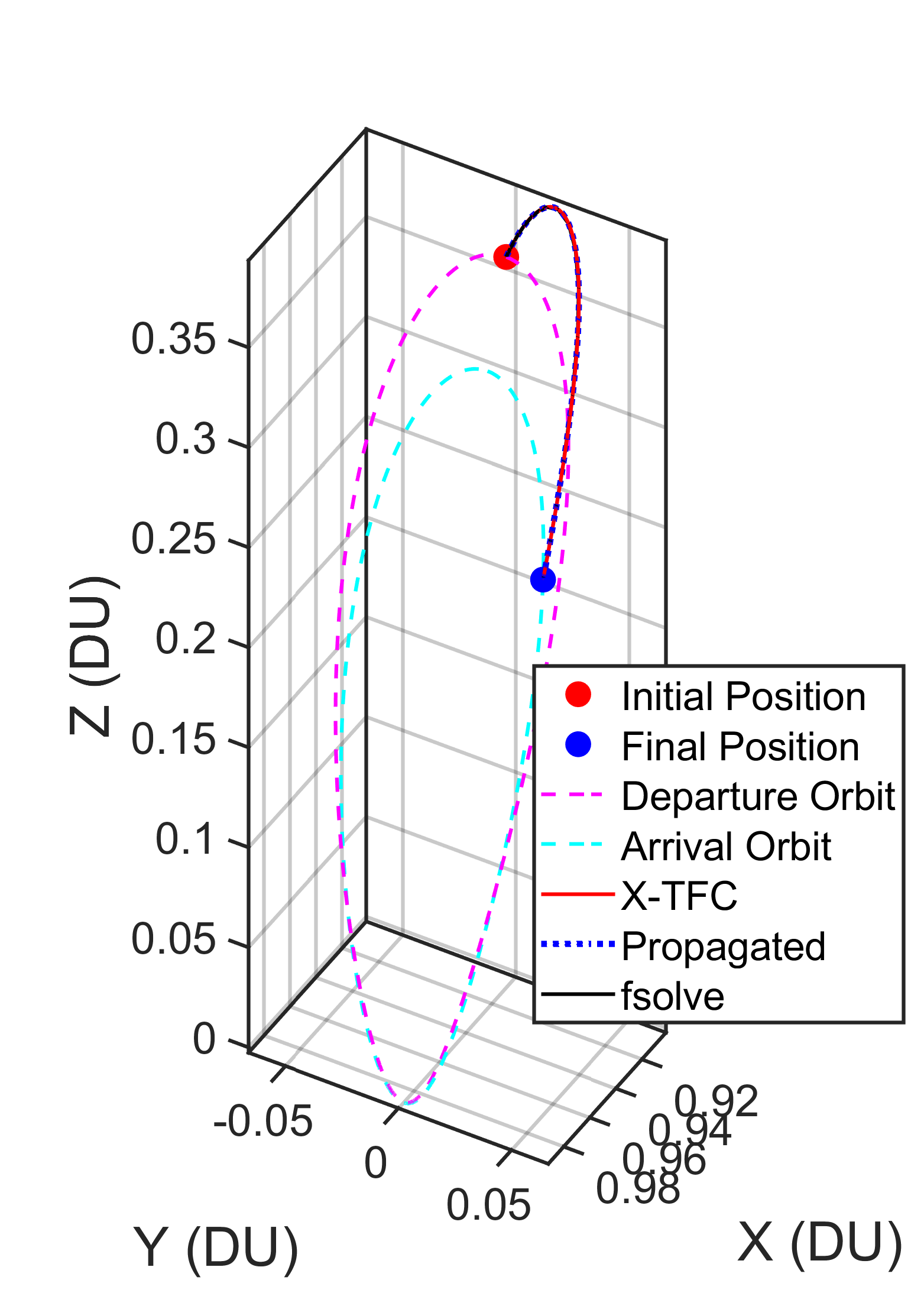
(a)
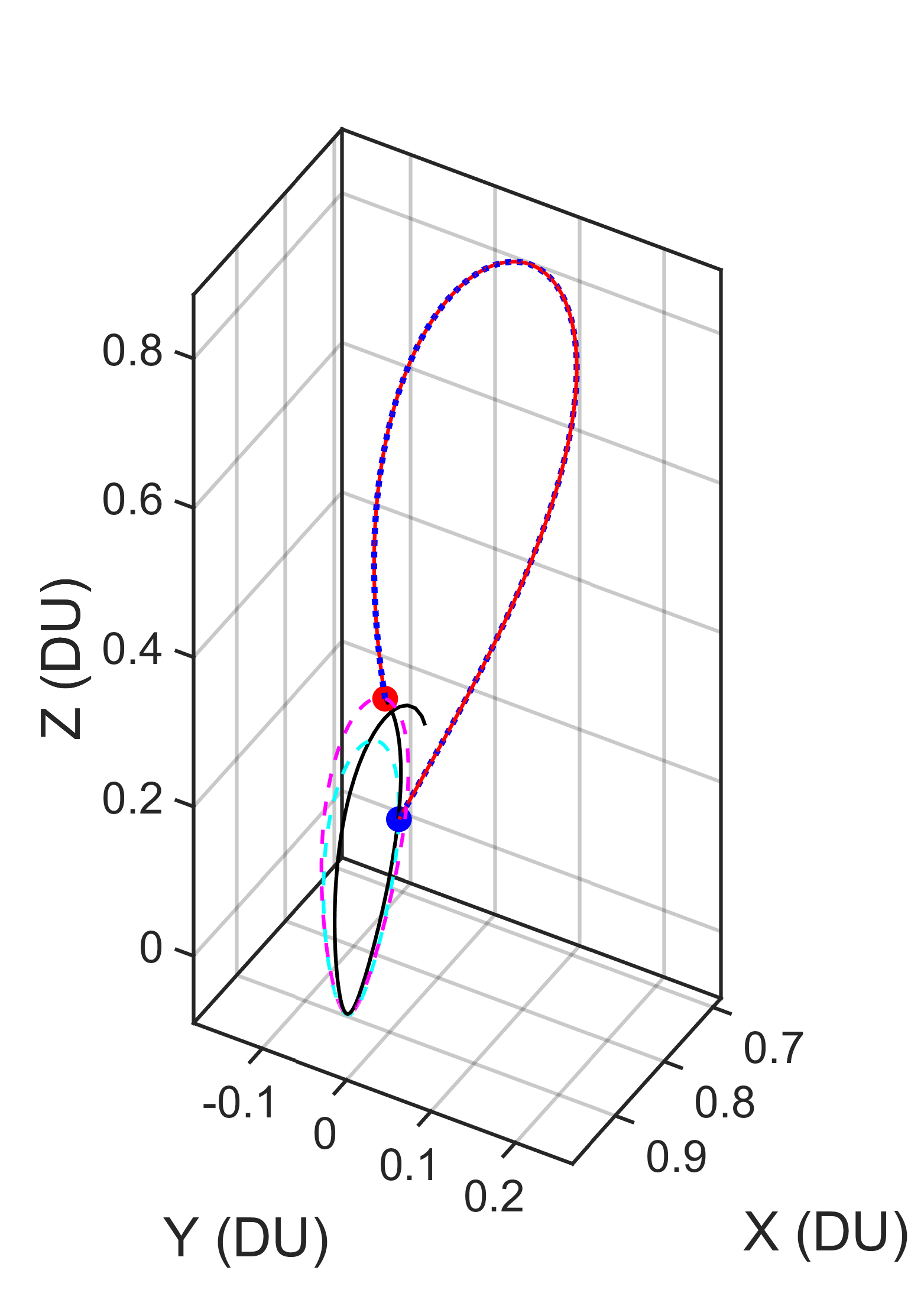
(b)
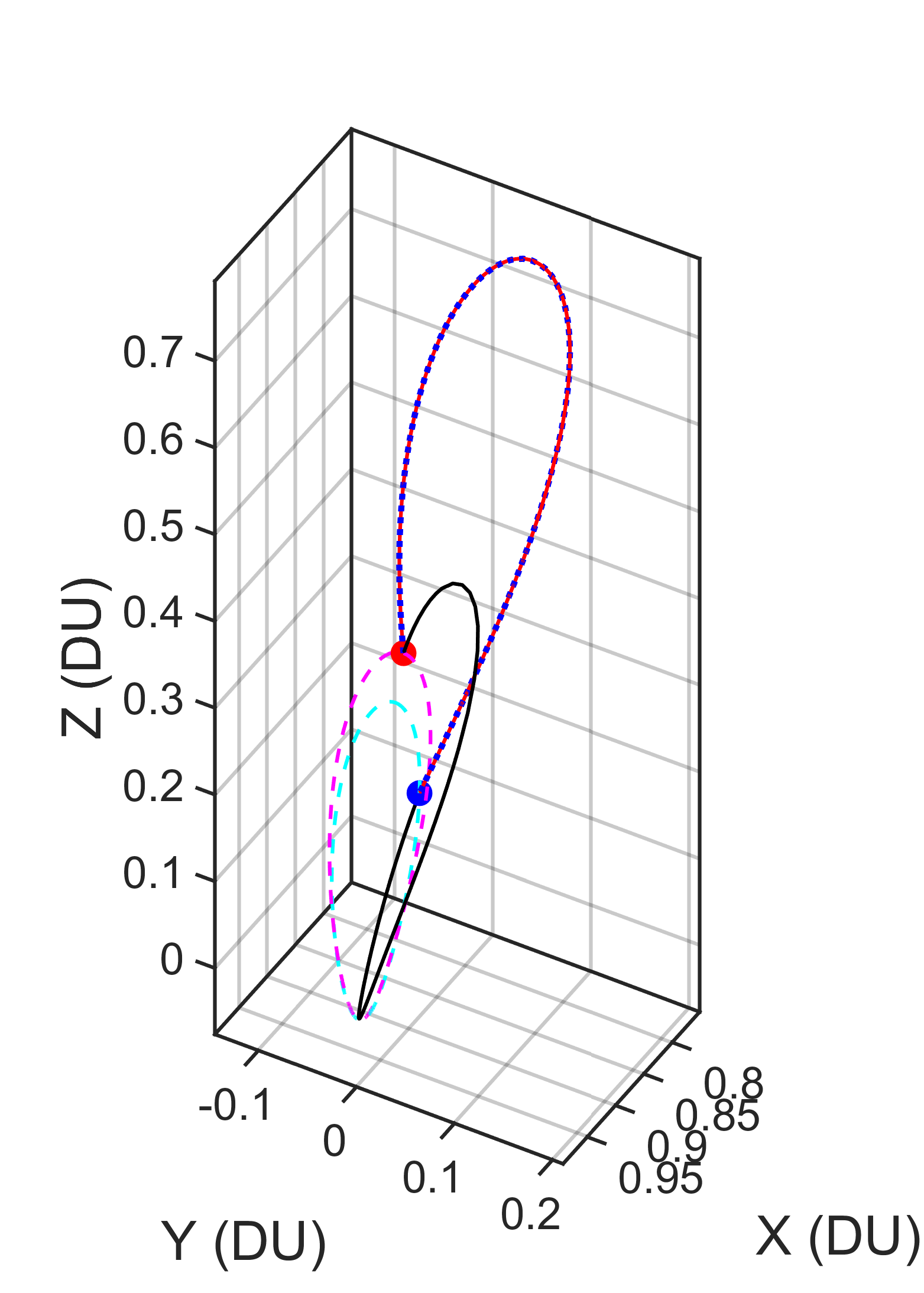
(c)
Figure 3: Transfer between two halo orbit family by X-TFC.
Contour-Integral Methods in the Circular Restricted Three-Body Problem
- Computing families of periodic orbits in the CRTBP via contour-integral techniques
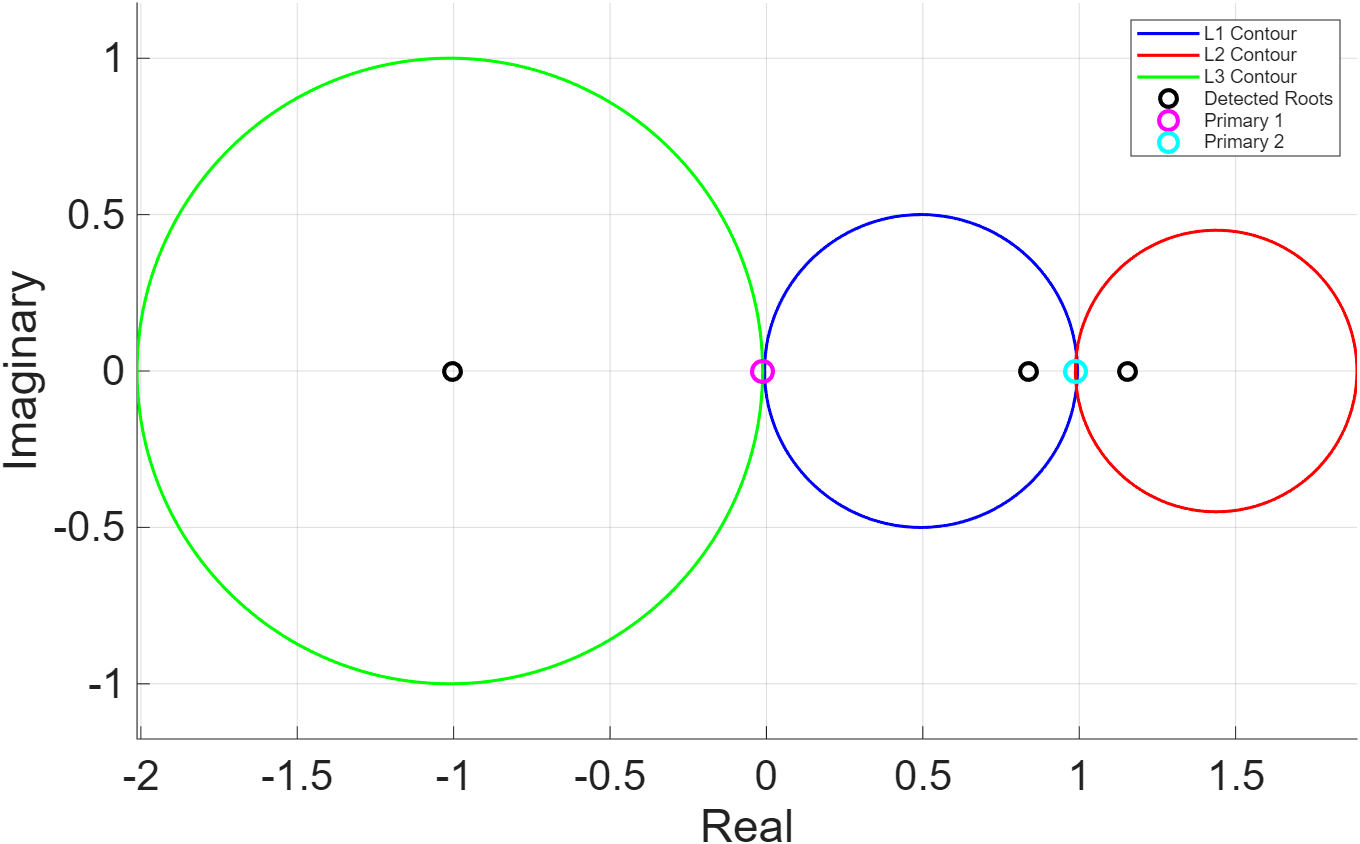
Figure 1: Lagrange points in Earth-Moon system with contours
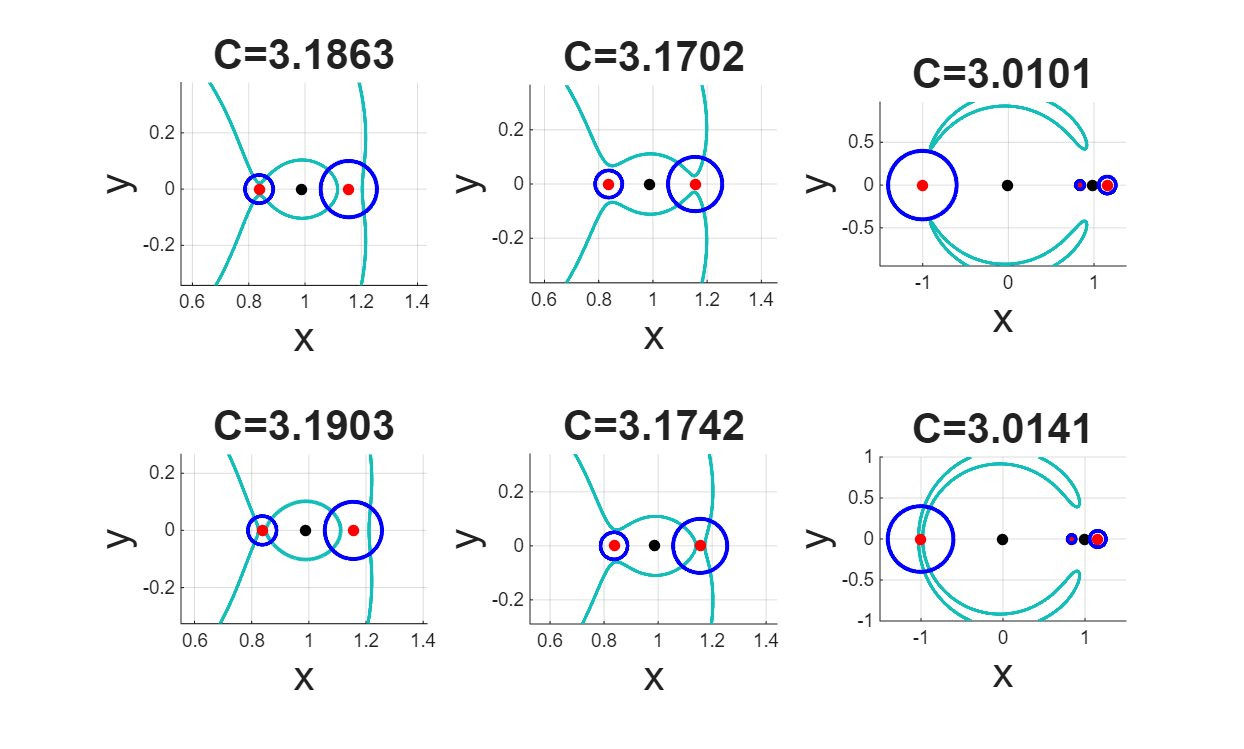
Figure 2: Zero velocity curve near Lagrange points to check availability of moving to each region (internal, Moon, or external region in Earth-Moon system)
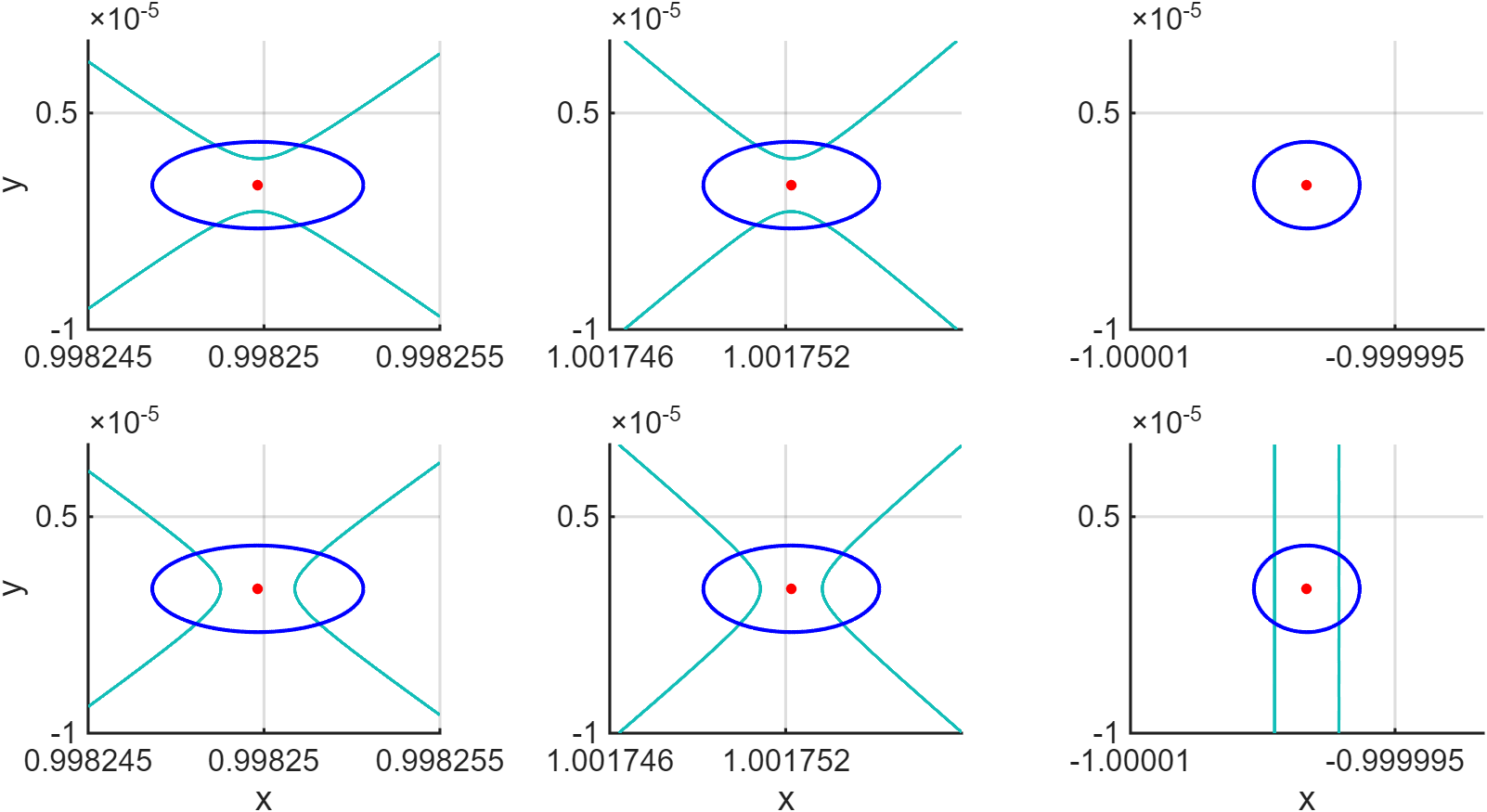
Figure 3: Zero velocity curve near Lagrange points to check availability of moving to each region (internal, moon, or external region in Mars-Phobos system)
🛰️ Autonomous Deep-Space Navigation & Orbit Determination
Geometric Approach to Angles-Only Measurement Navigation
🎓 Iowa State Collaboration
- Integrating unified position/attitude measurement models into state estimation, in collaboration with Iowa State University
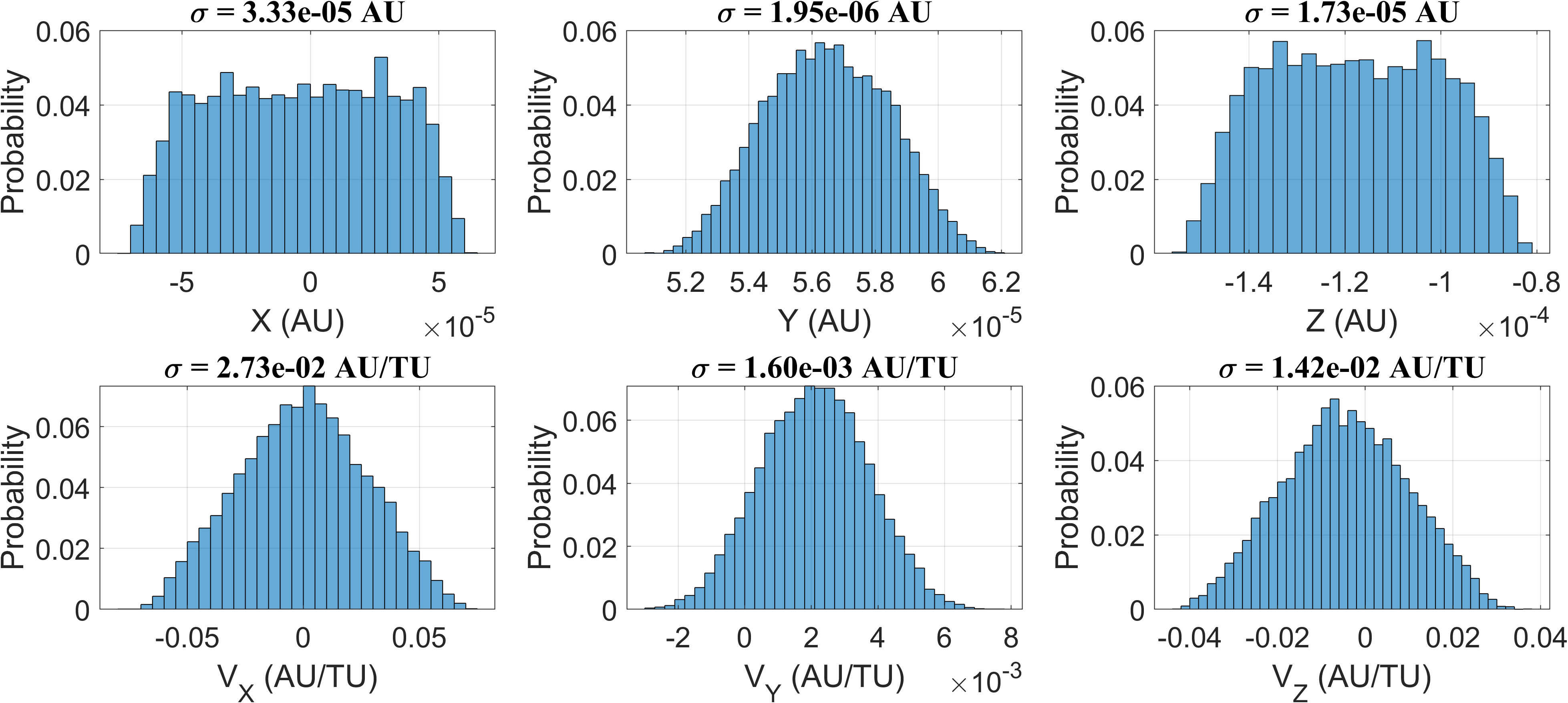
Figure 1: Monte Carlo simulation for initial orbit determination whose error shows Gaussian-like distribution
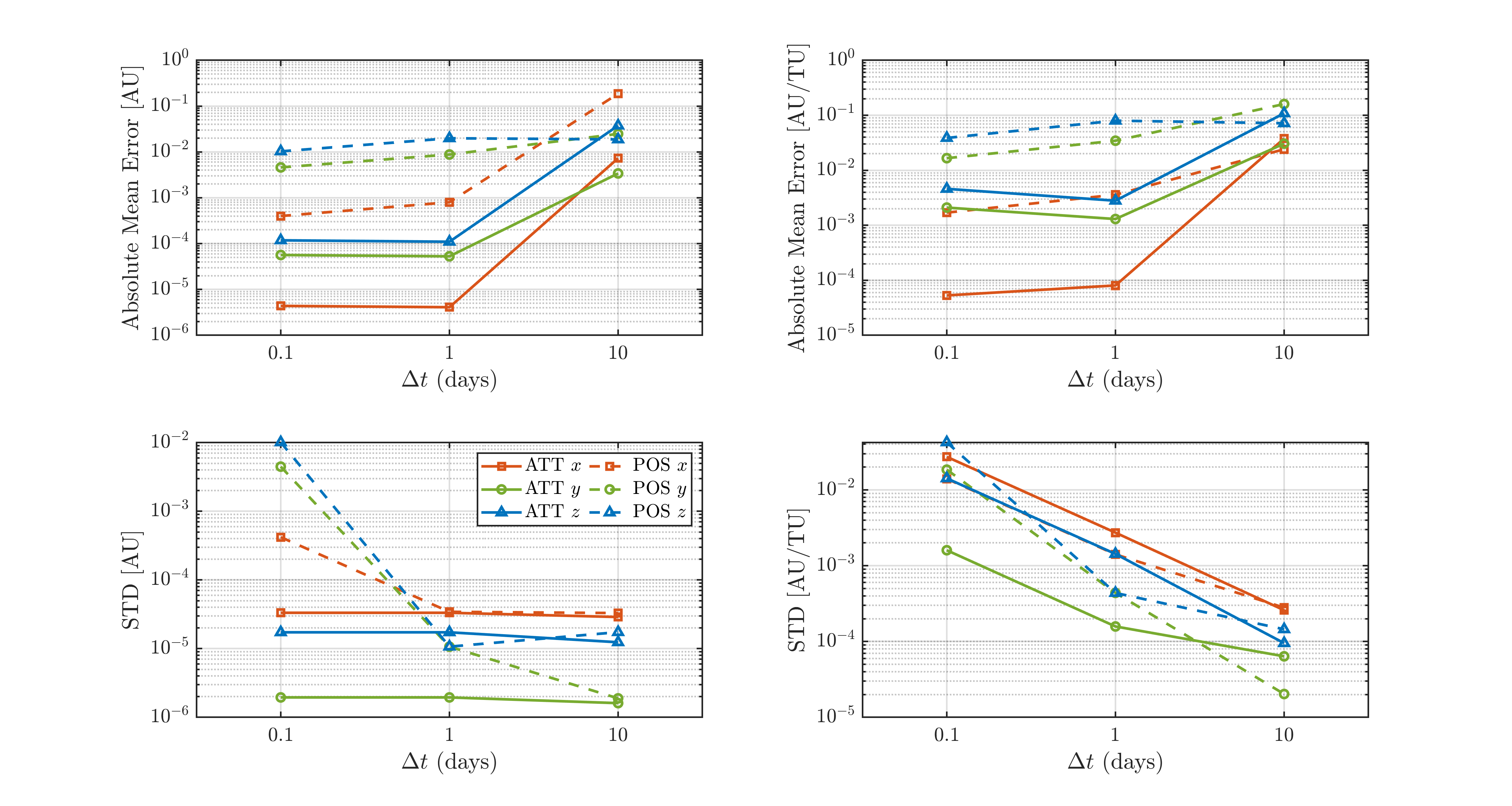
Figure 2: Initial orbit determination performance summary with attitude-based and position-based approach with different time intervals
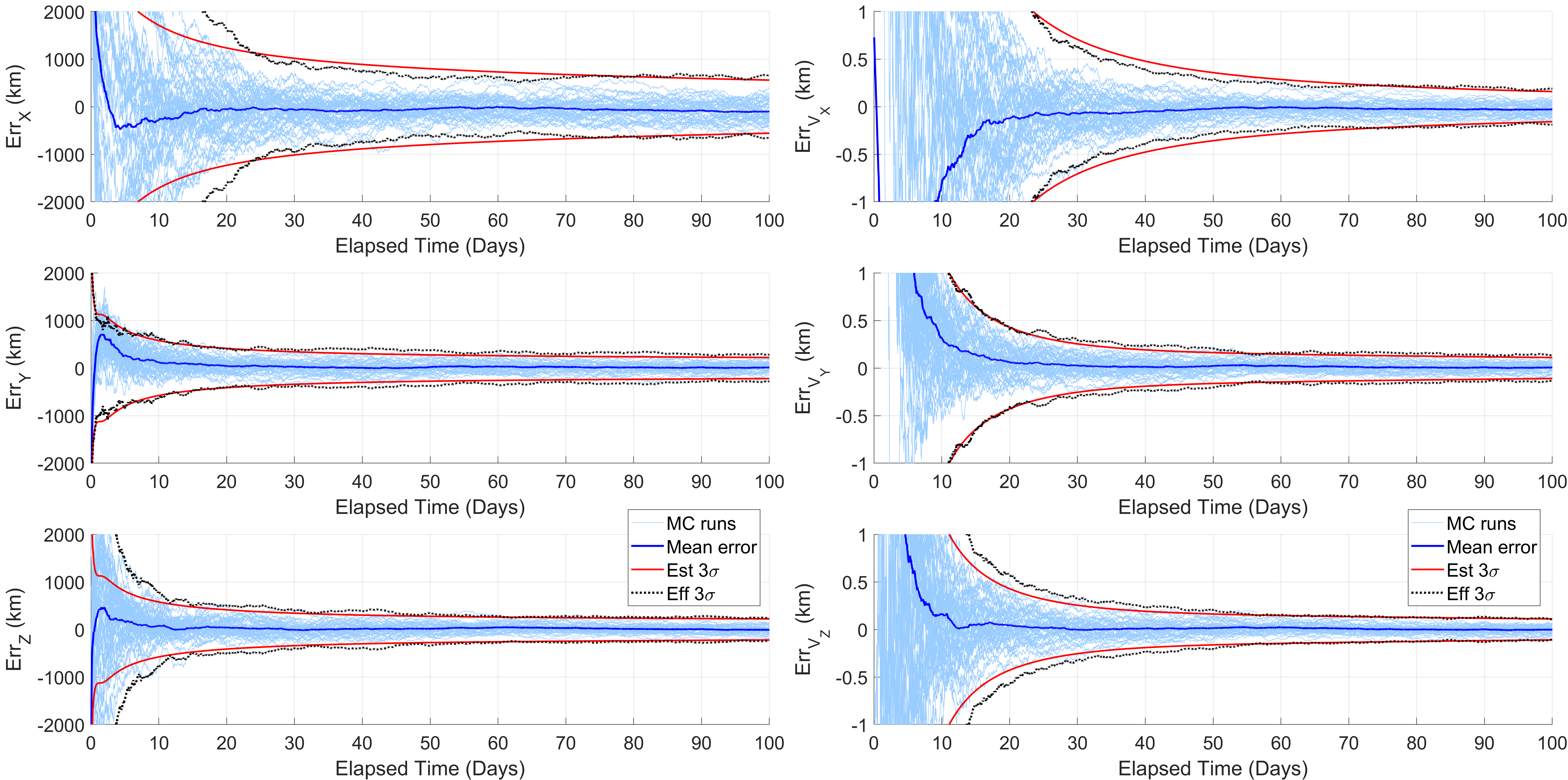
Figure 3: Recursive state estimation using Extended Kalman Filter (EKF) after IOD
Past Projects
Multidisciplinary Optimization for Mars Aerobraking Trajectories
- Formulated a multidisciplinary optimization problem coupling Mars aerobraking trajectory and spacecraft design to demonstrate performance improvements
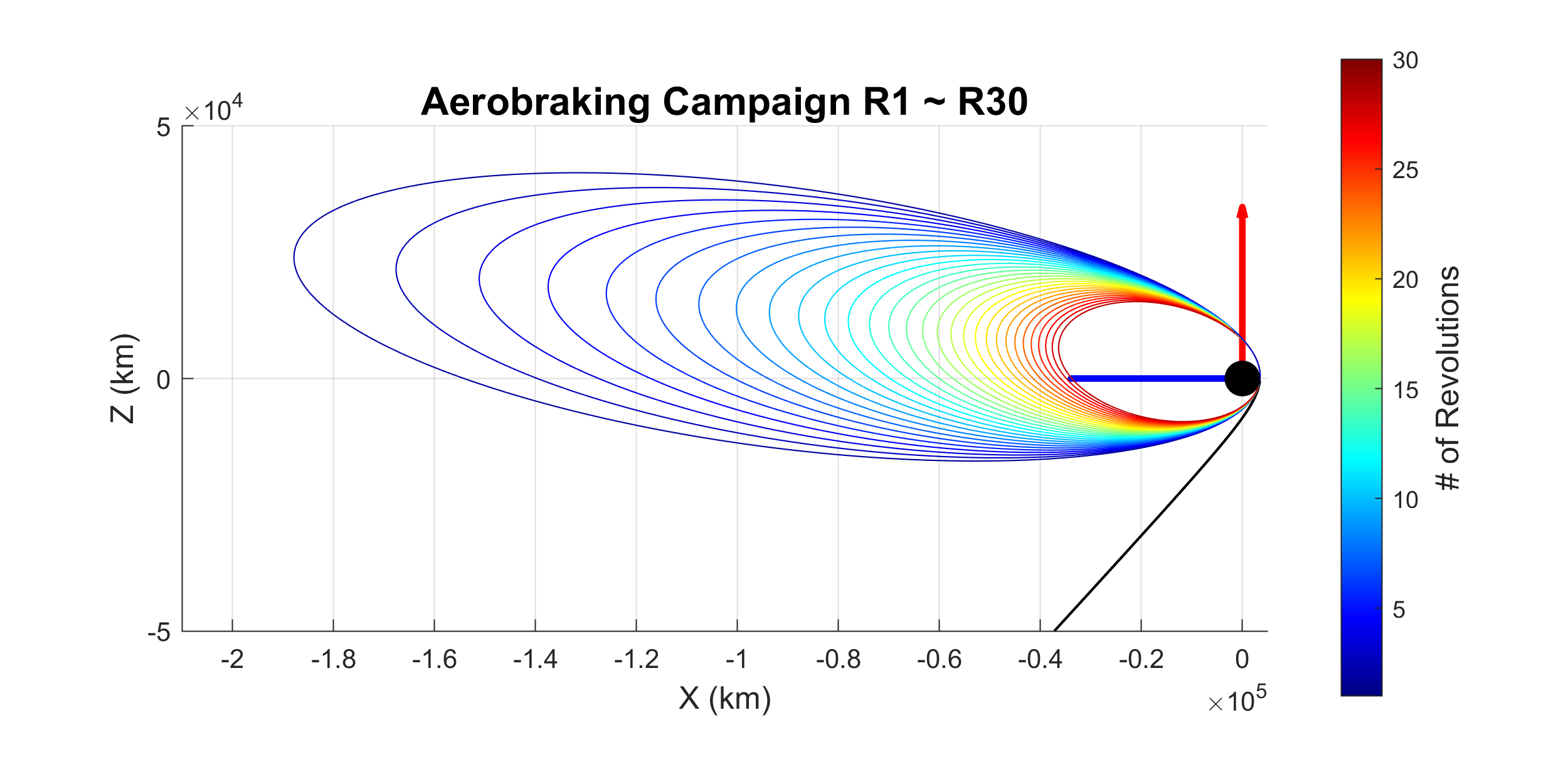
Figure 1: Initial aerobraking campaign from the first to 30th revolutions
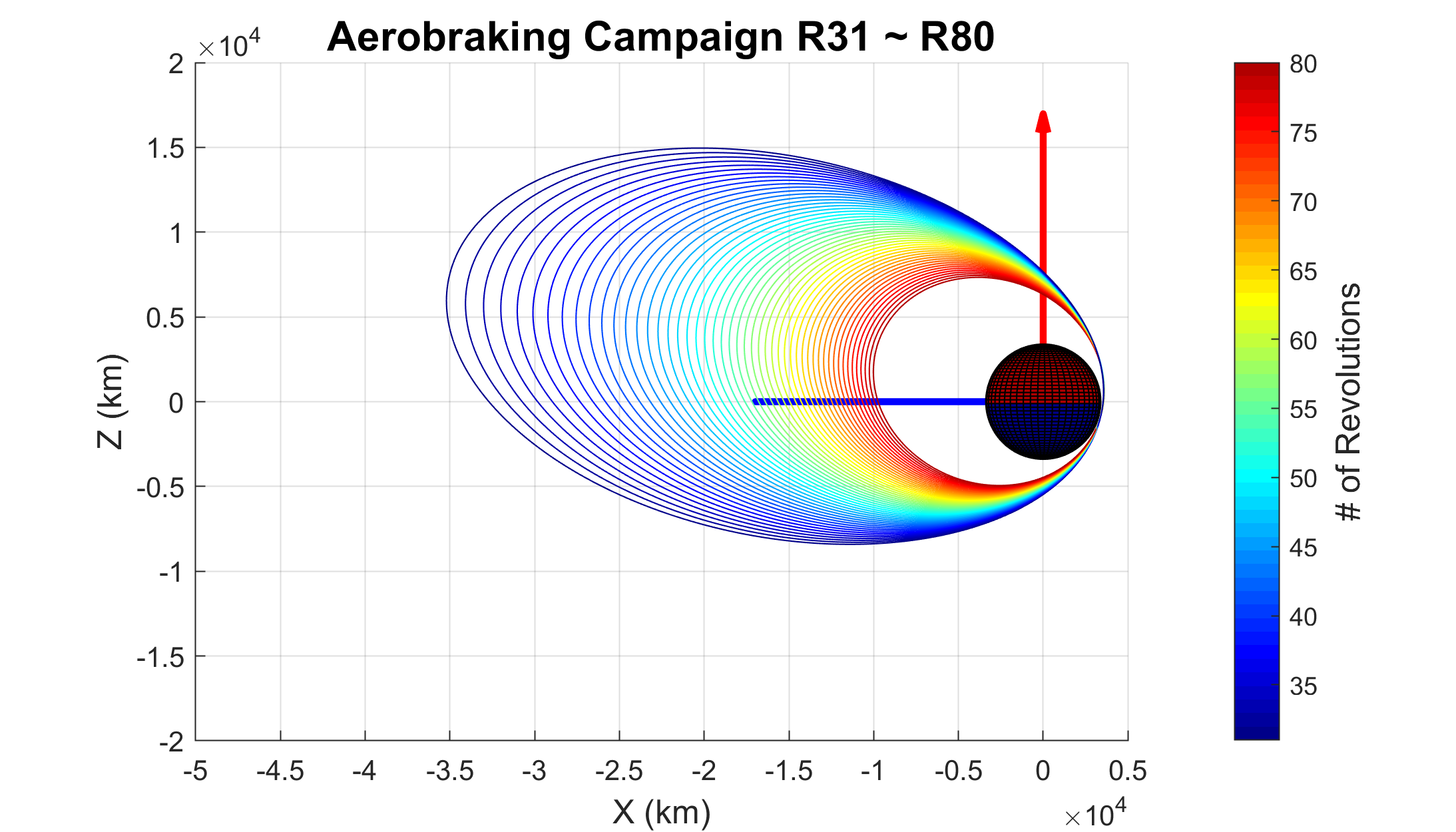
Figure 2: Intermediate aerobraking campaign from 31st to 80th revolutions
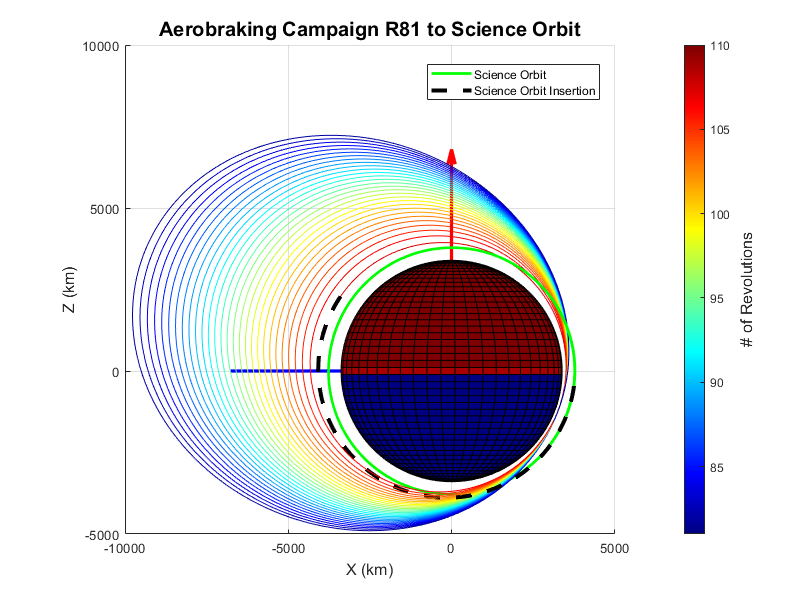
Figure 3: Final aerobraking campaign until science orbit insertion
Vectorized Dynamic-Size Genetic Algorithm Development
- Developed a vectorized dynamic-size genetic algorithm integrating a GPU-accelerated neural network–based Lambert's approximator to rapidly generate optimal and suboptimal flyby sequences
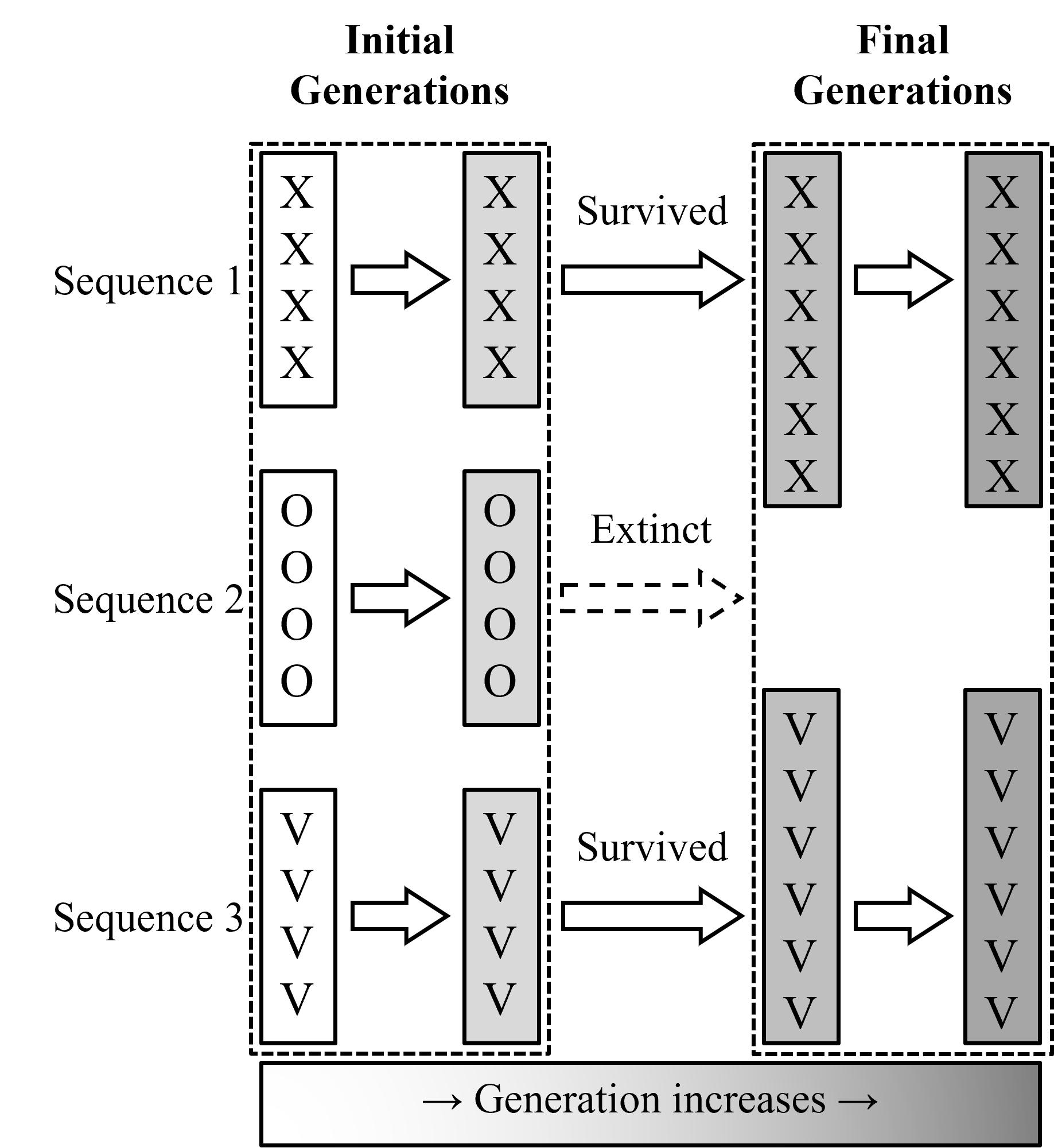
Figure 1: Vectorized Dynamic-Size Genetic Algorithm Architecture
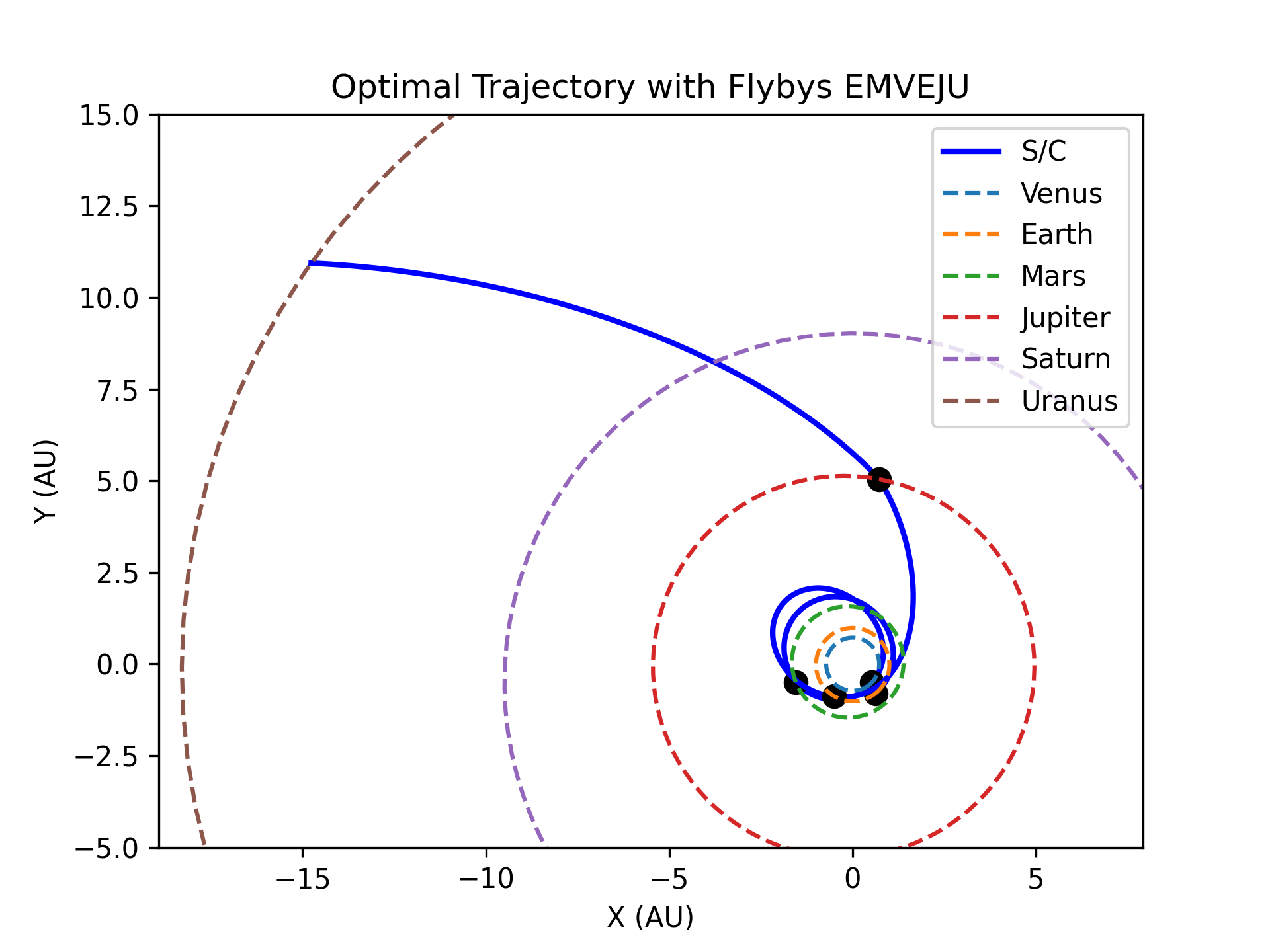
Figure 2: Example solution from Earth to Uranus (zoomed-out view)
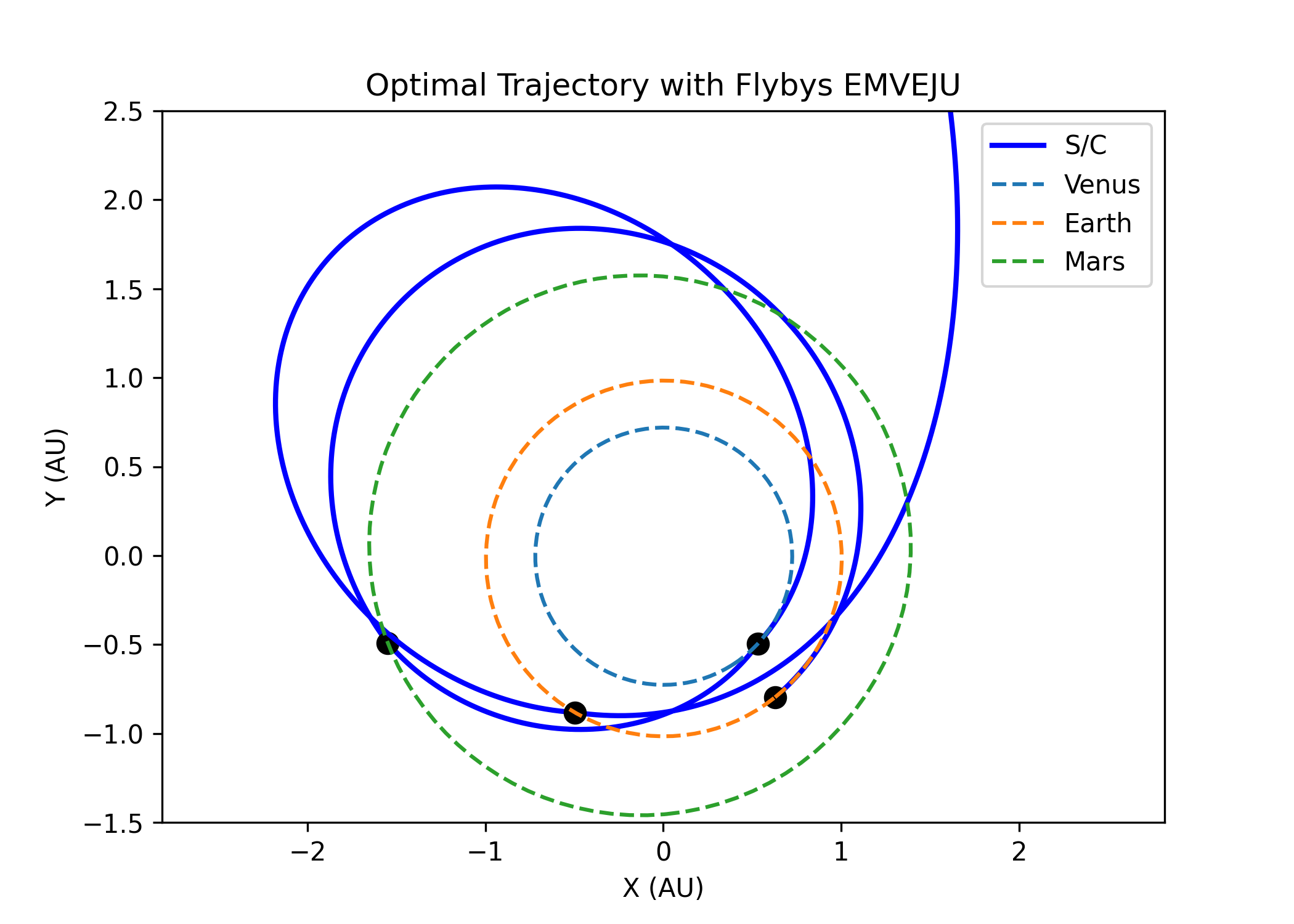
Figure 3: Example solution from Earth to Uranus (zoomed-in view)
Ambiguity-Free Geometric Approach to Deep Space Navigation
Using Angles-Only Measurements- Developed an algorithm to determine a position and attitude of the spacecraft without any priori information with a rough initial guess of distance
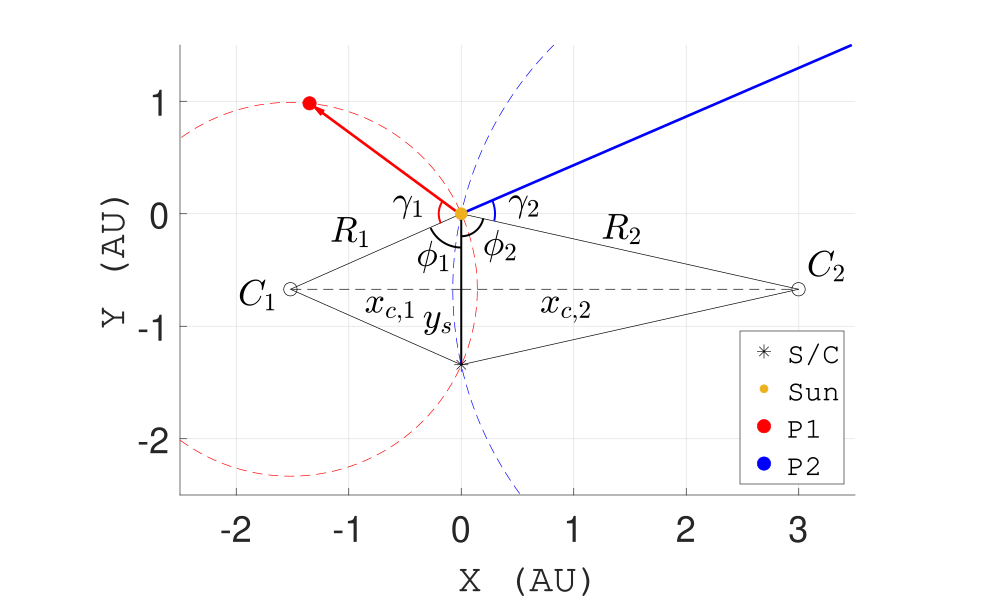
Figure 1: An example geometry for angles-only measurement deep-space navigation with circumcircles
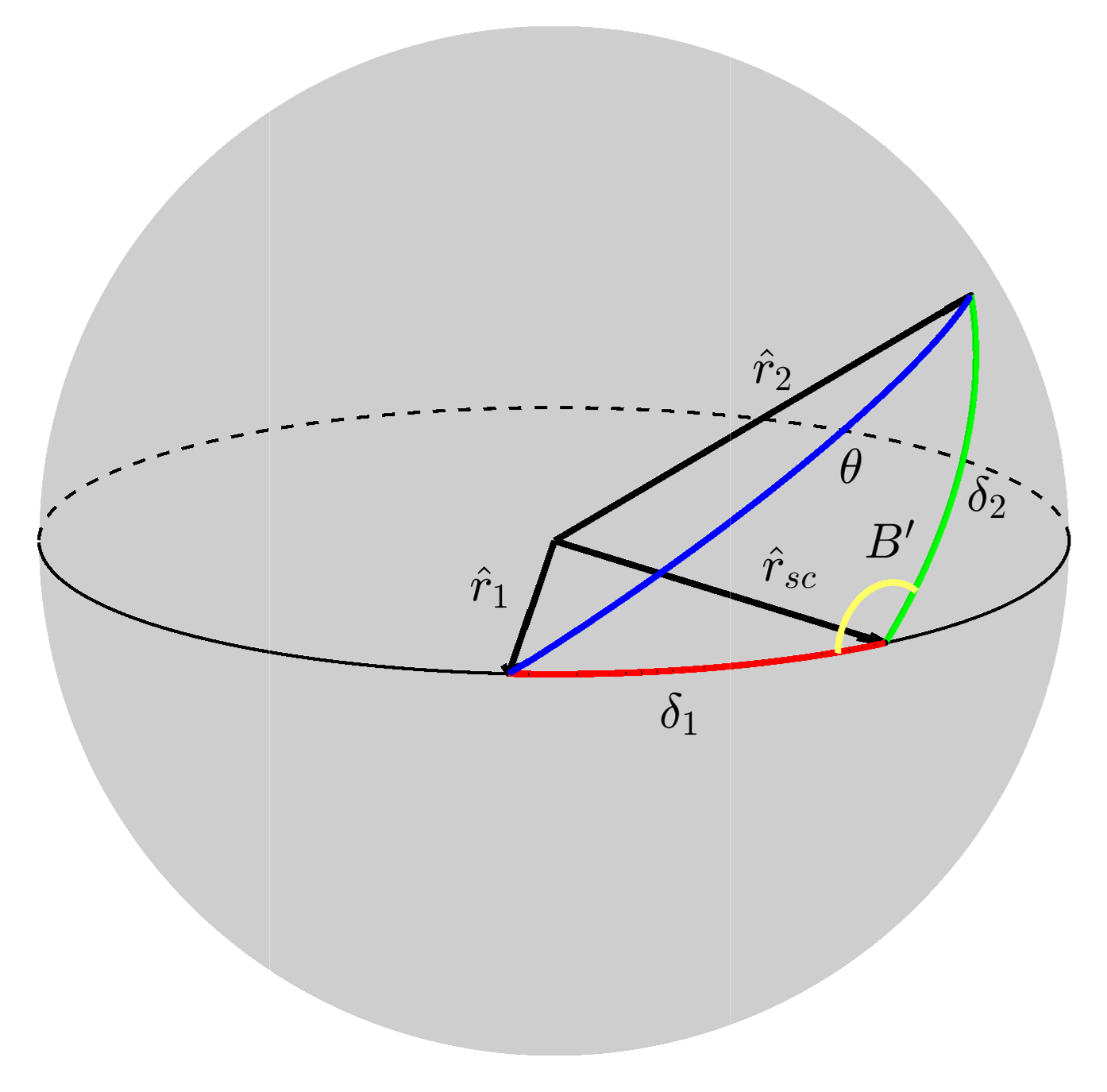
Figure 2: Geometrical relationship on a sphere for spherical trigonometry
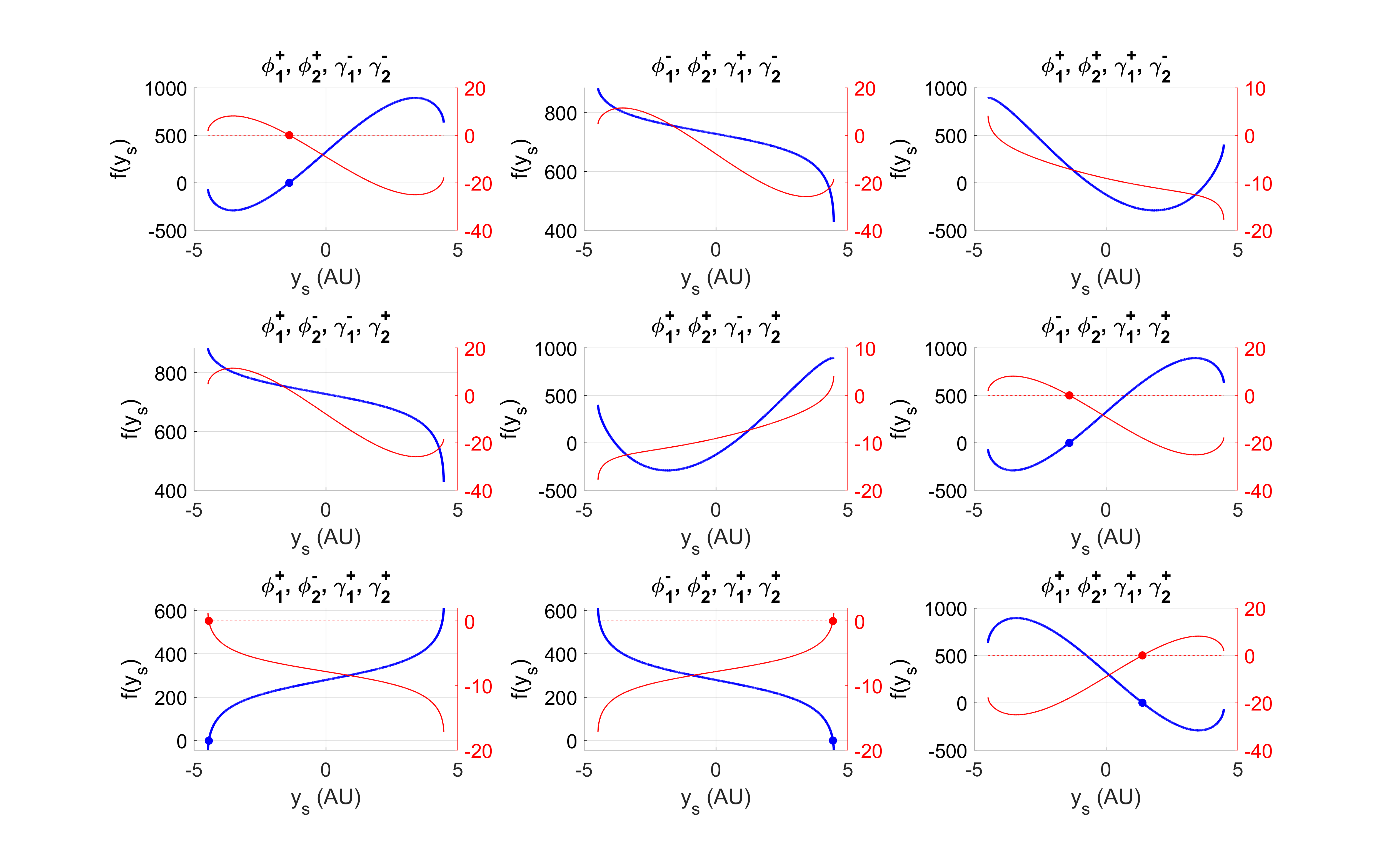
Figure 3: Solution for the distance of the spacecraft from the Sun depending on sign ambiguity